
ICAS Maritime Affairs Handbill (online ISSN 2837-3901, print ISSN 2837-3871) is published the last Tuesday of the month throughout the year at 1919 M St NW, Suite 310, Washington, DC 20036.
The online version of ICAS Maritime Affairs Handbill can be found at chinaus-icas.org/icas-maritime-affairs-program/map-handbill/.
Disruptions in global energy supplies for numerous countries have led to renewed interest in pursuing alternative regions, pivoting towards the consideration of the Arctic region as a viable maritime corridor. This month, the U.S. initiated new measures to strengthen its geopolitical standing in the polar region following the security agreement reached with Denmark in September, not only expanding its military access to Greenland, but also by gutting of environmental evaluations to speed up oil and gas exploration in the Alaskan North Slope, and arrival of the USS Oregon (SSN-793) attack submarine in Norway. Allies of the U.S. are taking measures to maintain access to the Northern Sea shipping route through various priorities driving differing strategies. For example, the EU has revamped their approach to the Arctic region by ensuring sustainable policy initiatives for the protection of the climate, while also emphasizing economic development and connectivity, and security. While Canada and Iceland have reaffirmed their cooperation on Arctic security, South Korea’s completion of their first commercial container ship voyage to Europe via the Northern Sea Route, demonstrates the necessity of an experimental approach to understanding current technological capabilities weighted against the realities of the polar region’s harsh climate. The hope that the Northern Sea Route will serve as a reliable substitute for access to the Strait of Hormuz, has illuminated Russia’s presence as a key exporter of liquified natural gas (LNG) and a prominent military actor in the Arctic Circle.
Countries are eager to develop strategies for viable economic and military competitiveness in the Arctic region, simultaneously seeking to bolster infrastructure, research, and technologies to preserve the polar climate. This is especially the case for countries such as Denmark, Finland, Iceland, Norway, and Sweden whose ministers have signed a joint declaration inspired by the Nordic Prime Ministers’ Vision 2030 to accelerate green initiatives and electrification mechanisms for relevant stakeholders. Even though these countries’ vision for the future will play a key role in shaping the nature of interaction between human populations and the Arctic climate itself, current technological means for analyzing the unique attributes of the polar region are in various stages of development and effectiveness. Relevant examples include the EU’s expansion of observational data collection through projects like OceanEye and Destination Earth, and researchers at New York University Abu Dhabi making use of historical sea data in order to predict movement of sea ice. China has also demonstrated significant technological developments in the region through successful completion of eight voyages through the Northern Sea Route. Despite these generative technological practices, there is still a plethora of unknowns that lie at the juncture between strategic energy and oil supply, potential military confrontations, and irreversible effects of climate change.
“Norway and Russia agree to increase cod and haddock quotas”
October 26 – Arctic Today
[Russia, Norway]
An agreement on the quota for cod in the Barents Sea has been reached by the Joint Norwegian-Russian Fisheries Commission, detailing an increase by 14% to 325,000 tonnes for 2027. The commission is responsible for producing regulatory measures, catch data, and compliance and enforcement matters. Although the commission has also agreed to restrict the catching of capelin fish due to being a key food source for the cod, these measures are not without their own geopolitical tensions. While the commission will continue to negotiate the exchange of quotas on cod, an increase in the fishing vessels in the Barents Sea is incongruous with the Russian Navy’s intent to carry out missile firings in the coming days.
“More than 20 years of data challenge one-size-fits-all view of Arctic cloud-forming particles”
October 22 – Phys
[Finland]
A study conducted by researchers at the University of Helsinki’s Institute for Atmospheric and Earth System Research (INAR) has introduced a new framework for understanding the Arctic region based on how and where clouds materialize. Minute particles known as “aerosols” form at different concentrations across the Arctic, necessitating the need to distinguish areas into three regimes—the High Arctic, Maritime Arctic, and Continental Arctic, the study argues. This development is the accumulation of more than 20 years of research, serving as a milestone in observational data technology for the region.
“European Union updates its Arctic Policy”
October 21 – Arctic Portal
[European Union]
The European Commission’s updated Arctic policy initiative, “Europe’s Northern Neighbourhood: A New Strategy for the Arctic,” will prioritize stronger policy in the security infrastructure, economic opportunities, and conservation of the Arctic region. A number of said efforts will be led by projects such as the Arctic Cable Hub, OceanEye, and Destination Earth. The EU is leading the charge in conducting research for thorough sustainable policy initiatives ensuring the protection of the climate, though one of the most significant stated aims of increasing their presence in the region is concern for Russia’s control over much of the Arctic Ocean.
“Coast Guard Cutter Munro Wraps Up Arctic Patrol After Tracking Chinese Research Ships”
October 20 – gCaptain
[United States, China]
The U.S. Coast Guard has observed three Chinese marine ships transiting Alaskan Arctic waters and the U.S.’ EEZ as explicated in a new report. Two research vessels, Xue Long and Xue Long 2, were mentioned in the report by name. The recent U.S. initiatives follow the Navy’s efforts to cooperate with the Royal Canadian Authorities to carry out joint naval communication and command-and-control systems operations, resulting in increased monitoring of the Bering Sea. Even though foreign vessels are protected under international law, marine research vessels can be scrutinized by the U.S. government if found in U.S.-controlled waters.
“Northern Sea Route transits surpass 2025 levels as EU seeks greater Arctic access”
October 20 – Safety4Sea
[European Union, China, Russia, Globe]
104 transit voyages across the Northern Sea Route were confirmed to have occurred from the beginning of the year to September 30th, 2026 as reported by the Centre for High North Logistics (CHNL). This figure surpasses the amount reported for all of 2025, indicating the importance of recognizing a growing interest in new shipping corridors seemingly provided by the Arctic region. This importance is also visible in the European Union’s initiative to cooperate with the United States and Canada in maintaining a presence in the region.
“Trump says oil, gas and mineral exploration in Greenland is set to begin. It’s not that simple.”
October 14 – AP News
[United States]
The Trump Administration is furthering its aim to acquire ownership of Greenland as exemplified by its explicit desire for rare earth mineral procurement and recognition of its geostrategic location. U.S. acquisition of the territory would not amount to complete and utter control over its resources. Apprehension towards the policy is in part due to the unpredictable effects mining for rare earths would have on the climate of the Arctic region.
“China makes first Arctic-to-Antarctic video call via its own satellites”
October 12 – MediaSat
[China]
During China’s 16th Arctic expedition, four vessels held a video call, with some in the Arctic Ocean while others were in the Antarctica region. The ships utilized China’s state-owned satellites in low orbit and were connected for about 30 seconds. This technological feat is the first of its kind and was conducted in late September.
“Trump administration cuts environmental reviews to fast-track Alaska oil exploration”
October 12 – Arctic Today
[United States]
The U.S. Bureau of Land Management has decided that oil exploration operations in the Alaskan North Slope region such as seismic surveys, ice road construction, and well drilling, will no longer need to be subject to individual environmental evaluation before being conducted. Prior to this reconfiguring, the nature of individual oil explorations would be analyzed under the National Environmental Policy Act. Under the premise of streamlining the process, the alleged change will allow for quicker energy resource extraction, though environmental organizations have continuously warned of the significant detrimental effects on the land and wildlife this policy will have.
“Singapore Minister Launches Arctic Programme in Reykjavík”
October 12 – Iceland Review
[Singapore, Iceland]
Singapore’s Minister of State, President of Iceland, and the Arctic Circle Chair all conveyed during the Arctic Circle Assembly to further develop their Five-Year Arctic Initiative. This initiative will prioritize multilateral cooperation on the management of developments in the Arctic region, especially as they affect Indigenous communities. Artificial intelligence was also among the topics of discussion.
“Sweden Releases Sanctioned Tanker After Seven-Month Detention”
October 12 – The Maritime Executive
[Sweden, China]
A Chinese-owned tanker known as Sea Owl 1 (75,000 dwt) has been the subject of numerous investigations by the Swedish Transport Agency due to allegations of incorrectly sailing under an illegitimate flag in the Baltic Sea. There have been two separate instances where captains of the ship were arrested under the pretense that they knowingly presented false papers, although one of them was later released. The Sea Owl 1 has been sanctioned by the European Union but has been released from its detention order as of October 12th.
“USS Oregon Arrives in Norway”
October 12 – U.S. Navy Press
[United States]
The USS Oregon (SSN 793) fast-attack submarine has docked in the Port of Grøtsund, Norway for scheduled routine operations. Due to an alliance between the U.S. and undersea forces in the Arctic and northern European region, U.S. naval forces regularly train with the Royal Norwegian Armed Forces. This alliance manages the logistics hub that provides replenishments for routine naval check-ups and crew support, materializing stronger interoperability between allied countries across the Arctic region and the United States.
“South Korea completes trial of Arctic shipping route”
October 11 – PhysOrg
[South Korea, Europe]
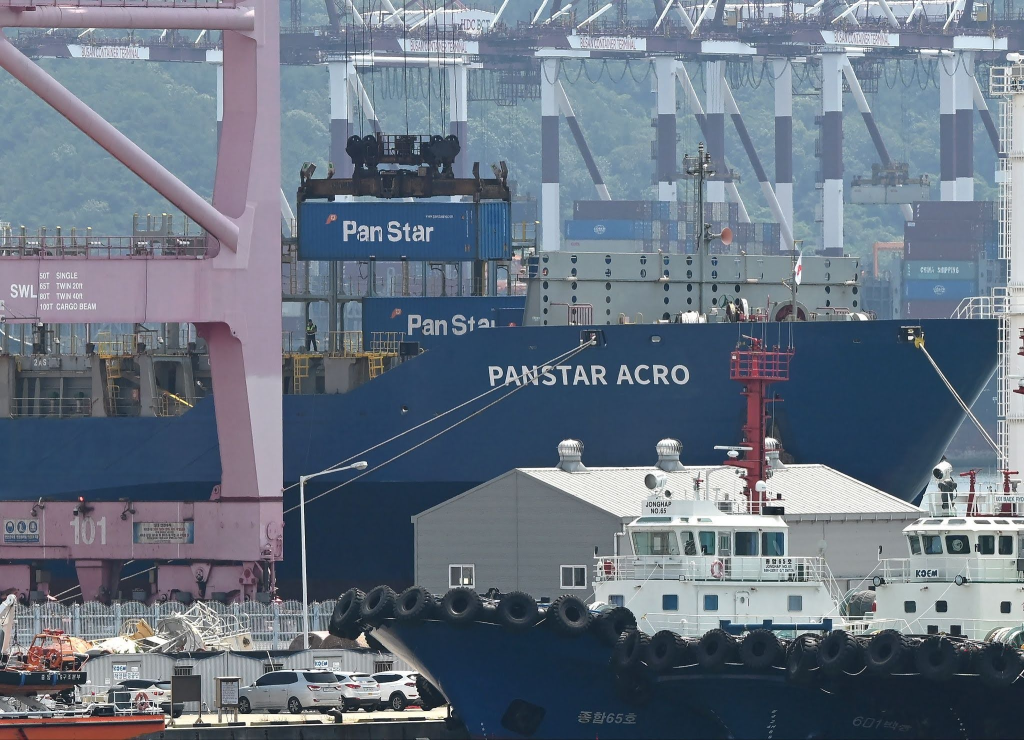
The South Korean container ship called PanStar Acro has completed a voyage to Europe through the Northern Sea Route, a shipping lane that runs between the North pole and Russia. The ship made stops in Britain, the Netherlands, and Poland, reducing the overall travel times by 10 days when compared to through the Suez Canal. Although this reduction in travel time is significant, the expansion of commercial shipping threatens the health of the Arctic ecosystem. Major shipping companies such as Hapag-Lloyd have already considered their presence in the region, and have pledged not to use the route. Conversely, the South Korean government has been visible in their aims to reconstitute Busan as a “southern maritime capital region”.
“New algorithm could predict Arctic sea ice up to 9 months ahead, offering new climate insights”
October 11 – PhysOrg
[United Arab Emirates, Globe]
An algorithm used to predict the movement of sea ice in the Arctic Ocean is being developed by researchers at the Mubadala Arabian Center for Climate and Environmental Sciences (ACCESS) at New York University Abu Dhabi. Using historical sea ice data, the algorithm called the Random Analog Predictor (RAP) can make predictions up to nine months in advance. These predictions will provide greater insight into how climate change shapes the nature of shipping in the Arctic region and vice versa.
“Prospect of Arctic Blasts Threatens Energy Traders’ El Niño Bets”
October 11 – Bloomberg
[United States]
El Niño is presenting a flurry of anxiety among investors in the energy trading sector. While the super storm is expected to keep temperatures more moderate this winter, sudden cold snaps and outbreaks from the Arctic region are disrupting analysis for predicting demand for natural gas to heat homes in the United States. Predictions for the effects of El Niño exacerbated by the Arctic region are increasingly hard to estimate in the context of supply and demand for natural gas.
“Iceland Brings Atlantic Current Risks to Arctic Circle”
October 8 – Iceland Review
[Iceland]
The weakening of the Atlantic Meridional Overturning Circulation (AMOC) was an issue of great significance for Iceland’s environment ministry at the recent Arctic Circle Assembly meeting. AMOC is a naturally occurring deep-sea conveyor that monitors Europe’s winter temperatures, although in recent years it has been transferring warm water up towards the region at unprecedented levels. The Atlantic current has been categorized as an existential threat to Iceland.
“China Completes 8 Northern Sea Route Sailings, Transporting 14,000 TEUs Before Winter Closure”
October 8 – Marine Insight News
[China, UK, Germany, Czech Republic]
A Chinese shipping company known as Sea Legend has completed all eight of its planned departures for the Arctic shipping season connecting routes between China and Europe. Shipments were completed to over 20 European countries including the UK and Czech Republic, with voyages carrying over 14,000 TEUs in total. Although it is estimated that one voyage through the Arctic sea route takes about 18 to 20 days, shrinking transport times in half compared to transits through the Suez Canal, the arctic route only lasts for about four months per season from July to October.
“Sanctioned Chinese heavy lift carrier on standby outside Norwegian Arctic coast”
October 8 – Eye on the Arctic
[China, Norway, Russia]
A Chinese heavy lift carrier known as the Ya Qing Hai Yang, has been identified as drifting near the Aynov Islands, extremely close to Russia’s maritime border with Norway. The vessel has been involved in delivering shipments containing industrial modules to the Arctic LNG 2, a liquefied natural gas production facility owned by Russia. It is speculated that the ship was “awaiting orders”. The Ya Qing Hai Yang presence in the region is significant as Russia’s Arctic LNG 2 is currently on international sanctions lists.
“U.S. Looks to Iceland as It Expands Military Footprint in Arctic”
October 6 – The Wall Street Journal
[United States, Iceland, Greenland]
The United States Secretary of State visited Iceland—a part of a larger three day tour of the North Atlantic Treaty Organization countries—in an effort to increase U.S. military presence across the Arctic region. Following U.S. efforts to incorporate Greenland into its military stronghold, Iceland has been identified as a strategic maritime corridor for the U.S., with considerable airfields, ports, and surveillance infrastructure capabilities of its own. These efforts transpired alongside the U.S. President making escalatory statements by referring to Iceland as a part of U.S. territory.
“Shadow Fleet Traffic on Northern Sea Route Surges as Arctic Safety Concerns Grow”
October 5 – gCaptain
[Russia]
The Lithuanian NGO, Bellona’s Environmental Transparency Center, has released a new analysis detailing the number of shadow-fleet ships carrying Russian oil through the Northern Sea Route during the 2026 summer shipping season. It was reported that more oil tankers were sanctioned in the first two months of the 2026 season than the entirety of 2025. Russia’s Northern Sea Route administration is pulling back from releasing its reports on both intentional and unintended confrontations in the area. Additionally, properly supplying liquefied natural gas tankers (LNGs) with the necessary equipment to traverse the region continues to present its own challenges in voyage completion.
“Europe to keep Arctic Ban on Oil & Gas Drilling”
October 5 – Industrial Info Resources
[European Union]
The European Union and Norway are currently negotiating Norway’s plans to begin drilling for oil and gas in the northern Barents Sea. The sea is located just north of the Norwegian coast, with 33 projects planned in the region that are estimated to be worth almost $3 billion USD in investments. The European Union maintains a strong concern for the environmental effects the investments could impose, though part of Norway’s justification is in just how much the EU has been dependent on it for a source of pipeline gas in recent years. While Russia’s share of gas exports to the EU have fallen from 40% to just 6%, Norwegian gas exports have risen from 79.5 billion cubic meters (bcm) to 89.3 bcm in 2025 alone. Norway plans to move forward despite explicit concerns from the EU.
“U.S. Navy Commissions Flight III Destroyer USS Ted Stevens (DDG 128) in Alaska”
October 4 – NavalNews
[United States]
The U.S. Navy has unveiled the completion of its USS Ted Stevens (DDG 128) in a ceremony in Whittier, Alaska. The ship is the latest installment of the Flight III Arleigh Burke-class guided-missile destroyer, possessing upgraded missile defense capabilities. Alaska has played an integral role in U.S. maritime presence in the Arctic region, especially during World War II. Although the ship’s operational presence will be decided once it docks in Norfolk, Virginia, the ceremony’s location in Whittier Alaska underscores the essential role that Alaska plays as a central geostrategic location for the U.S. in the Arctic maritime domain.
“China Arctic service container ship returns to Asia via Suez”
October 4 – Seatrade Maritime News
[China, Europe, Russia]
The Dubai Tower is the first container ship a part of the shipping company Sea Legend whose aim is to complete its eight weekly voyages between China and Europe. Utilizing the Northern Sea Route on its way from China, the ship departed on August 15th before arriving in the UK on September 9th. The ship will not return via the Arctic route, but instead from Europe to the Mediterranean and before finally sailing through the Suez Canal.
“China announced the suspension of container traffic on the Arctic route”
October 2 – Eurasia Daily
[China]
China has announced its suspension of container shipments along the Arctic route that were set to be delivered to Europe. Goods with an estimated value of $79.5 million such as electric vehicles, energy storage systems, and rechargeable batteries usually made their way via the Northern Sea Route though the reported suspension is due to the conclusion of the navigation season. The suspension will be operational until the summer of 2027.
October 1 – Nordic Co-operation
[Denmark, Finland, Iceland, Norway, Sweden, Greenland, Faroe Islands]
A joint declaration between the ministers for Nordic Cooperation and the ministers for Business was announced in order to strengthen Nordic competitiveness in a range of areas. Countries in the region are looking to provide new opportunities for companies and relevant stakeholders by developing market integration, reducing dependency on critical raw materials, and accelerating green initiatives and electrification mechanisms. Overall, this newly crafted set of initiatives is a reflection of the countries’ commitment to the Nordic Prime Ministers’ Vision 2030 of transforming the region into the most “sustainable region in the world”.
October 1 – PBS News
[Switzerland]
The volume of ice in Switzerland saw record losses this year as CO2 emissions continue to justify the necessity of implementing reliable renewable energy resources. This 5.5% decrease is the second-largest drop on record and due to lower snowfall and more heat waves across the globe. These developments are significant as Switzerland supplies other major rivers across Europe and as the head of the Glacier Monitoring in Switzerland network (GLAMOS) has indicated, can be ascribed solely to “anthropogenic climate change”.
“US expands military footprint in Arctic under new defense deal”
September 30 – Alaska News Source
[United States, Denmark]
The U.S. has reached a deal with Denmark to add two new military installations, one in the south of Greenland and another in the north. They have also agreed to expand the already existing Pituffik Space Force Base in northwestern Greenland with the intention of preventing adversarial countries from acquiring control of critical minerals in Greenland. In addition, the two countries have agreed that foreign investments in sensitive sectors towards Greenland must be approved by the U.S.
“Hegseth reassures Southeast Asia of US commitment, pledges stronger defence ties”
October 27 – Reuters
[United States, ASEAN region, Philippines]
The Secretary of War, Pete Hegseth, has reassured ASEAN defense ministers of U.S. commitment to stronger maritime domain awareness. This coincides with the secretary’s visit to the Southeast Asian region as the effects of the Iran war on these countries worsen. Maritime tensions between the Philippines and China are another source of concern pertaining to security in the Indo-Pacific region. The U.S. has also proposed the development of a US-ASEAN framework for defense cooperation.
“Brent crude jumps to highest since April on Houthi attacks, UAE oil spill”
October 24 – NikkeiAsia
[Saudi Arabia, United Arab Emirates, Yemen]
Oil prices continue to soar due increased military incursions between the Houthis and Saudi Arabia. October has witnessed the most intensified amount of attacks on energy infrastructure in the Middle East, accelerating the prices of Brent crude oil in global markets by over two percent. At the same time an oil spill off the coast of the United Arab Emirates also signals that actors responsible for attacks on shipping in the region are noticeably becoming more difficult to identify.
October 19 – Zona Military
[China]
China’s naval arm of its People’s Liberation Army has conducted drills at sea using its Type 071 amphibious assault ships. The drills included simulations of air threats and at-sea replenishment procedures. Coordinated responses, effectiveness of radar operations, and interception capabilities were also carried out. The Type 071 amphibious assault ships are designed to transport a significant amount of troops and vehicles from sea to shore, marking another indication of their naval to land military capabilities.
“Donald Trump revives effort to halt construction of Ørsted’s offshore wind farm”
October 13 – Financial Times
[United States]
The Trump administration has renewed calls for dismantling the construction of a major offshore wind farm in the northeastern region of the United States. The interior department cites national security concerns for the presence of the wind farm despite being operated by multinational energy companies in allied countries, Denmark and Germany respectively. The administration continues to project the idea that wind energy construction will only harm scientific research in the long term.
“Subsea Security and Defence 2027 to Convene Naval Leaders in Singapore”
October 13 – Ocean News and Technology
[Singapore]
The maintenance of undersea cables is experiencing increased attention by naval leaders, security agencies, and Ministers of Defense at the Subsea Security & Defence conference set to take place in 2027. These cables are crucial to regional security in the Asia-Pacific region by virtue of containing and transferring a bulk of the world’s data across the globe. The recently announced conference will address topics including but not limited to awareness of the maritime domain, cross-border collaboration and information sharing.
“Japan considers having nuclear-powered submarine study in security documents”
October 8 – The Japan Times
[Japan]
The Japanese government is considering adding nuclear-powered submarines to its maritime arsenal in order to strengthen its deterrence capabilities. The vessels under consideration possess numerous advantages such as the ability to travel at speeds of more than 50 kph, and can be submerged for months at a time. On the other hand, a few increased budgetary concerns would include specialized training for engineers to operate the nuclear reactors and general operating costs.
“Subsea cable cut between Philippines and Singapore disrupts internet services”
October 3 – Rappler
[Philippines, Singapore]
A shared undersea cable segment between the Philippines and Singapore was severed, affecting nationwide internet service. Companies who provide internet and telecommunications services were forced to reroute data through other submarine cables, lengthening the time it takes for data travel, subsequently causing websites to lag, sluggish download speeds, and cloud services harder to access outside of the Philippines.
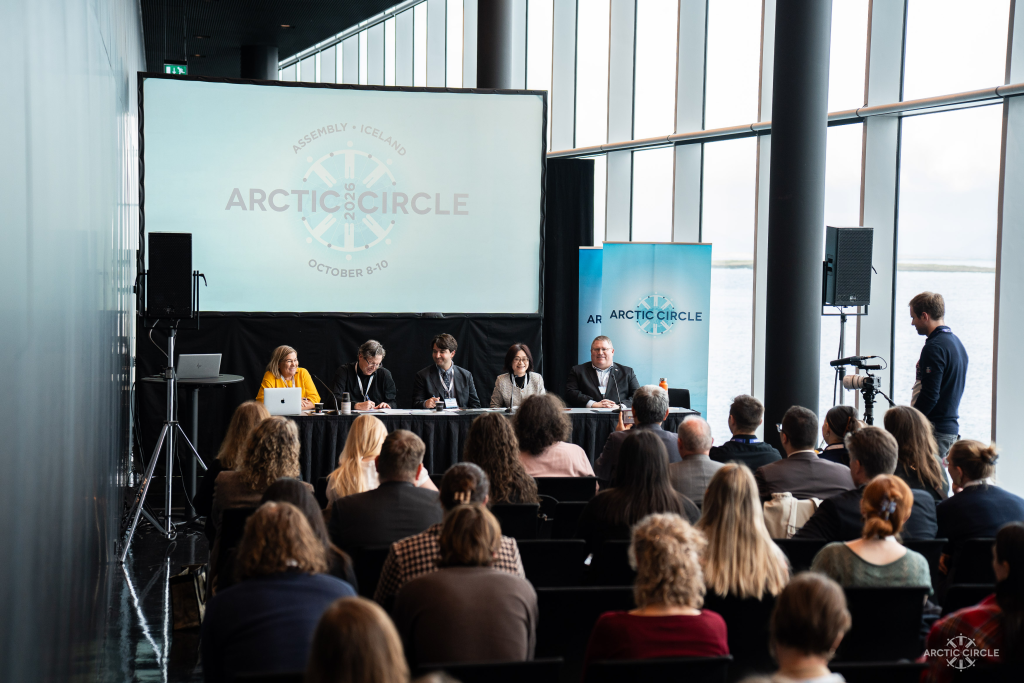
The 2026 Arctic Circle Assembly in Reykjavik offered a useful snapshot of how rapidly the Arctic agenda is changing. Security and strategic competition were more visible than in previous years, but climate change, science, shipping, Indigenous participation, critical minerals, infrastructure, and local development remained central to the conversation.
Over several days of discussion, the Arctic agenda appeared increasingly interconnected. Security concerns now reach into debates over infrastructure, scientific cooperation, and investment. Climate change is reshaping the conditions for shipping, resource development, and community life, while disruptions to global supply chains have renewed interest in Arctic routes. Greenlandic and Indigenous representatives also pressed for a stronger role in decisions that are often discussed elsewhere mainly through the lens of geopolitics and national strategy.
The result is an Arctic increasingly defined by competing narratives about what the region is, who has legitimate interests there, and which risks deserve the most attention.
China Is More Visible, but Perceptions Are More Divided
China had a noticeable presence at this year’s Assembly. Former Vice Foreign Minister Fu Ying addressed the plenary under the theme “How to Understand China” and later joined a dedicated dialogue on China, while other sessions examined China’s role in Arctic science and the prospects for rebuilding trust and cooperation.
That greater visibility has coincided with a wider divergence in how China’s Arctic engagement is interpreted. Some Nordic researchers and institutions continue to see value in cooperation with China on climate, sea ice, remote sensing, and marine science. In some policy discussions, particularly those centered on security, China is increasingly assessed in the context of strategic competition, China-Russia relations, critical infrastructure, and dual-use capabilities, which means that research vessels, scientific facilities, shipping activities, and infrastructure projects are scrutinized for possible strategic implications alongside their stated civilian or scientific purposes.
Greenlandic and other local Arctic perspectives often place greater emphasis on the practical consequences of outside engagement, including employment, community benefits, participation in decision-making, and the distribution of environmental and social costs. Assessments of China therefore vary considerably depending on whether the primary concern is security, scientific cooperation, economic development, or local governance.
This divergence also raises a broader question about how risk should be assessed. Nationality alone is a poor substitute for examining the substance of a project, including who controls and finances it, what capabilities it creates, how data and infrastructure are governed, whether it generates forms of strategic dependence, and what regulatory safeguards apply. Such an approach does not dismiss legitimate security concerns; it provides a more precise basis for distinguishing identifiable risks from judgments shaped mainly by wider geopolitical competition.
A More Security-Centered U.S. Arctic Debate
The United States had a strong presence in Reykjavik, and much of the American discussion linked Arctic policy to alliance management, infrastructure, energy, and defense. Two days before the Assembly opened, U.S. Secretary of State Marco Rubio visited Iceland and emphasized the country’s strategic importance to the defense of the North Atlantic and Arctic, pointing to military, economic, and infrastructure-related challenges across the High North.
Similar themes ran through the Assembly, where NATO, alliance coordination, infrastructure protection, trust, and regional security appeared repeatedly in discussions involving American participants. Recent U.S. policy toward Greenland added another layer to these debates. The defense agreement signed by the United States, Denmark, and Greenland in September expands the scope for U.S. military activity in Greenland while placing tighter controls on certain third-country military activities and sensitive foreign investments. Greenlandic leaders have continued to emphasize both NATO cooperation and self-determination, and the agreement has not removed wider concerns about how an expanding U.S. role may affect Greenland’s political autonomy and relations within the alliance.
Those concerns were also evident in Reykjavik, where participants from Greenland, Canada, and parts of Europe raised questions about sovereignty, local decision-making, and the implications of a stronger U.S. role in the region. American speakers frequently returned to the importance of allies and established institutional frameworks, while discussions elsewhere at the Assembly reflected continued unease over recent U.S. Arctic policies and their impact on relations among regional partners.
The U.S. presence also had a strong economic dimension, particularly through Alaska. Energy development, infrastructure, and investment featured prominently in discussions involving Alaskan representatives, placing domestic economic interests alongside security and alliance concerns.
Greenland and Indigenous Actors Are Demanding More Agency
One of the clearest messages in Reykjavik came from Greenland, where officials stressed that decisions affecting the island should not be made without Greenlandic participation. This position has gained greater weight as outside actors increasingly discuss Greenland in connection with military access, critical minerals, shipping routes, infrastructure, and strategic geography. Seen from outside, Greenland is often approached as a strategic space, while debates within Greenland place greater emphasis on ownership, employment, environmental costs, community participation, and political autonomy.
Indigenous participation adds another dimension to this debate, because Arctic governance also involves communities whose livelihoods, cultures, political rights, and local economies are directly affected by climate change, resource development, infrastructure projects, and security policy. As geopolitical competition intensifies, questions of who participates in decision-making and who benefits from outside engagement are becoming more prominent.
For governments, companies, and research institutions seeking to operate in the Arctic, this places greater importance on engagement below the national level. Government-to-government communication remains essential, but projects involving research, infrastructure, mining, or commercial activity increasingly depend on early consultation with local governments, Indigenous organizations, and affected communities.
Arctic Shipping Is Gaining Strategic Relevance, but Commercial Constraints Remain
Developments beyond the Arctic are bringing renewed attention to northern shipping routes. Disruptions and security risks affecting established maritime corridors, including the Red Sea and the Strait of Hormuz, have strengthened interest in alternative routes, while Asian engagement with Arctic shipping has also become more visible. China has expanded seasonal commercial use of the Northern Sea Route, and South Korea has taken further steps toward testing regular Arctic services.
Commercial viability, however, still depends on much more than shorter sailing distances. Seasonal ice, ice-class vessel requirements, Russian regulation along the Northern Sea Route, limited port and communications infrastructure, search-and-rescue capacity, insurance premiums, and schedule reliability continue to shape the economics of Arctic shipping.
Arctic routes are therefore likely to remain supplementary to established corridors such as the Suez route for the foreseeable future. Their strategic significance may nevertheless continue to grow as governments and companies place greater emphasis on route diversification and supply-chain resilience, giving alternative maritime options value even where regular large-scale commercial operations remain difficult.
Competing Narratives Are Becoming Part of Arctic Governance
“Competing narratives” has become a useful way to describe the increasingly varied ways in which Arctic developments are interpreted. Chinese discussions tend to emphasize scientific cooperation, shipping, development, and the Arctic’s links to the wider international system, while many policy debates elsewhere place greater emphasis on security, alliances, infrastructure, and strategic competition. Greenlandic and Indigenous perspectives bring greater attention to local agency, community interests, and the social consequences of decisions affecting the region.
These perspectives are unlikely to disappear, and Arctic governance will increasingly depend on careful assessment of specific activities and projects rather than broad geopolitical assumptions. Scientific cooperation can carry strategic implications, but the nature and degree of risk differ across activities. Commercial investment may create dependence, although its significance varies by project, while China-Russia cooperation in the Arctic covers a range of areas without constituting a unified strategy across the region.
As strategic competition deepens, maintaining these distinctions will become increasingly important in Arctic policy debates. Practical cooperation remains possible in areas such as climate monitoring, pollution control, search and rescue, maritime safety, and scientific research, all of which continue to support the everyday functioning of the Arctic even when they attract less attention than military access, critical minerals, or great-power rivalry.
The 2026 Arctic Circle Assembly reflected an Arctic in which competing interpretations are increasingly shaping policy choices and expectations. The more important task is to keep those interpretations anchored in evidence, specific projects, and the realities of the region itself.
This issue’s Flagship Analysis was written by Nong Hong, Executive Director at ICAS.
South Korea’s first Arctic container voyage was an operational success and a diplomatic test. The PanStar Acro left Busan on August 22, called at Felixstowe, Rotterdam, and Gdansk via Russia’s Northern Sea Route and returned 50 days later, the first round trip between Korea and Europe by a Korean carrier’s container ship on that route. The voyage also required Seoul to consult Moscow and obtain Russian permits, drawing objections from Western diplomats. Korea has proven Arctic shipbuilding expertise, yet the route Seoul can pursue independently runs through Russian waters.
Hanwha Ocean, formerly Daewoo Shipbuilding & Marine Engineering, has built 21 icebreaking LNG carriers, more than any other shipyard. Fifteen were constructed for Russia’s Yamal LNG project, with the last delivered in 2019. The other six, ordered for Russia’s Arctic LNG 2 project, remain stranded at Hanwha’s Geoje yard under the sanctions imposed after Russia’s invasion of Ukraine. Washington, for its part, seeks Korean capital. Seoul committed $150 billion of a $350 billion U.S. investment package to shipbuilding cooperation under the MASGA initiative.
Washington’s icebreaker rebuild ran through a club of three. The Icebreaker Collaboration Effort, or ICE Pact, a 2024 framework, links U.S., Canadian, and Finnish shipyards and casts other allies mainly as buyers of their icebreakers. When a presidential memorandum in October 2025 authorized up to four of the Coast Guard’s 11 Arctic Security Cutters to be built abroad, all four went to Finnish shipyards. Korea’s role in U.S. shipbuilding has centered instead on maintenance, special-purpose vessels, and warship concept design. The pact’s founding statement envisioned a mechanism to add allies and partners; none has been extended to Korea.
The September 22 agreement among the United States, Denmark, and Greenland writes alliance tiers into treaty text. It bars states and investors from outside NATO, NATO partners, and EU member states from gaining control, as well as significantly influencing or accessing sensitive non-public information in Greenland’s “Particularly Sensitive Sectors or Activities,” which include critical infrastructure and resource extraction, unless the three parties agree otherwise.
Korea is one of NATO’s four Indo-Pacific partners, yet the agreement’s definitions article does not define “NATO partner.” NATO maintains partner relations with 35 countries and organizations, including several authoritarian states. Implementation falls to Greenland, in close cooperation with Danish authorities, under “any of its current or future investment screening laws.” Eight days later, the Trump administration announced that Korea would invest $54 billion in the Alaska LNG project; Seoul has conditioned its participation on commercial viability. Korea is welcome in the Arctic as a financier and in U.S. shipbuilding as a partner. Its place as an allied Arctic builder is less settled.
Canada’s submarine decision in July showed what decides a close race. Prime Minister Mark Carney selected Germany’s TKMS over Hanwha Ocean for up to 12 under-ice capable submarines, calling it “a difficult, close decision.” Ottawa emphasized interoperability with the German and Norwegian navies as Carney sought closer trade ties with Europe. Hanwha attributed its loss to “the barrier posed by the NATO alliance.” Both readings suggest that when capability is close, alignment weighs heavily, whether through NATO or a broader turn toward Europe. Hanwha remains the reserve supplier should negotiations with TKMS fail.
The pattern has a structural source. The allied Arctic is being organized through Euro-Atlantic institutions: NATO, whose Arctic role the Greenland agreement explicitly endorses; an icebreaker pact among three NATO members; and investment rules keyed to NATO and EU membership. Korea’s connection to that architecture runs through a single label, NATO’s Indo-Pacific partnership, which brings Seoul to NATO ministerial meetings but, as the Greenland text shows, has no settled meaning in allied investment rules. Japan, which also pitched icebreaker cooperation to Washington, sits outside the pact as well. The result is an asymmetry. Korean capital enters the alliance through the bilateral channel, while Arctic work is allocated through the multilateral one. The architecture is also lopsided in design: it contains explicit rules for keeping non-members out and, so far, only a stated intention to bring partners in.
Seoul’s route policy answers to commercial pressure. War in the Middle East has rattled global shipping, and a PanStar official cited China’s push for first-mover advantage as a reason to move quickly. China has set the pace. Sea Legend Shipping completed eight weekly sailings between China and Europe this season, carrying more than 14,000 TEU. PanStar had sought about 1,300 TEU for its trial and left with 737 TEU plus empty containers.
The two tracks have separate origins but converge in consequence. The venue where Korea acts most independently in the Arctic is the one Western allies most want closed. Western diplomats have raised their objections directly with Korean officials, and CMA CGM, MSC and Hapag-Lloyd have pledged to avoid Arctic routes. Seoul consulted Moscow on whether the ship might need Russian assistance, the kind of help that could expose Korean operators to sanctions. There is a legal argument in Seoul’s favor: unlike UN sanctions, U.S. and EU measures are not international law. The practical exposure is another matter, as Hanwha’s six stranded carriers and the $1 billion arbitration claim now attached to three of them show. The implication extends beyond Seoul. A capable ally kept outside the allied Arctic may come to rely on a route that Russia administers and China is turning into a scheduled corridor.
This issue’s Spotlight was written by Youngseo Kim, Part Time Research Assistant Intern at ICAS.
This month, analysis and research surrounding both the maritime domain and emerging Arctic maritime domain challenge the alleged inevitable nature of military conflict across the Pacific and Arctic regions. In both regions, institutional blocs of countries such as ASEAN are reconsidering the scope of pre-agreed upon response frameworks to existential crises such as climate change and the potential for a military incursion on Taiwan.
The conglomerate of Arctic countries, i.e. Canada, Denmark, Finland, Iceland, Norway, and Sweden are facing military and economic tensions between U.S. dominance and Russia-China cooperation. Analysis reveals that discourse on the Arctic region as an emerging zone for economic competition is drawing more attention to the concept of sovereignty and Indigenous leaders’ voices in conservation of the Arctic’s sea ice and general representation in Arctic governing bodies. There are competing approaches and ideologies towards the sanctity of sea ice in the Northern Sea with some perspectives leaning towards its melting as opportunities for new shipping routes while others acknowledge that the potential for the region to be completely ice-free as early as the 2030s, should be of grave concern. Additionally, technology specialized for the Arctic region such as icebreakers attached to the front of commercial shipping vessels, are being discussed as proxies for retaining a substantial military presence at the expense of actively seeking long-term solutions to the Russia-Ukraine War.
Competing Narratives in the Arctic
Hosted by ICAS & The Fletcher School of Law and Diplomacy, Tufts University
October 9, 2026
On October 9, ICAS and The Fletcher School of Law and Diplomacy at Tufts University cohosted the breakout session “Competing Narratives in the Arctic” at the 2026 Arctic Circle Assembly in Reykjavik, Iceland. Competing power narratives are reshaping how the Arctic is understood and contested through the lenses of security, development, science, sovereignty, and rules-based governance. This session brought together perspectives from the United States, China, Europe, Russia, and Indigenous communities, in order to examine how different understandings of the Arctic translate into concrete policy choices and institutional outcomes. It also explored how external narratives affect Arctic residents, Indigenous rights, local priorities, and the broader legitimacy of Arctic governance. By looking beyond state-centric perspectives, the discussion aimed to highlight the gap between external strategic framing and the lived realities of communities in the region.
Europe’s Arctic Recalibration: Ambitions, Constraints, and Strategic Choices
by Nong Hong
September 21, 2026
The European Union (EU) released its new Arctic Strategy on October 20, 2026, reflecting a changing assessment of the region’s geopolitical and economic importance. Since the EU adopted its previous Arctic policy in 2021, the Russia-Ukraine war, Finland’s and Sweden’s accession to NATO, growing interest in Arctic resources and shipping routes, and tensions surrounding Greenland have altered the regional strategic environment. Climate change continues to transform the Arctic, but security concerns and economic interests now occupy a more prominent place in European policy discussions.
Russia-Norway Fisheries Cooperation: Resilience and Its Limits
by Nong Hong
October 27, 2026
Norway and Russia reached a fisheries agreement on October 23, setting catch quotas for 2027 and extending their cooperation on scientific research and resource management in the Barents Sea. The negotiations, held in Istanbul, marked the first face-to-face meeting between the two sides since 2019. The agreement came despite continuing tensions over the Russia-Ukraine war, sanctions on Russian fishing companies, and disputes over access to Norwegian ports. It reflects the durability of fisheries cooperation, even as political disputes have begun to interfere with some of the arrangements that support it.