
ICAS Bulletin (online ISSN 2836-3418, print ISSN 2836-340X) is published every other week throughout the year at 1919 M St NW, Suite 310, Washington, DC 20036.
The online version of ICAS Bulletin can be found at chinaus-icas.org/bulletins/.
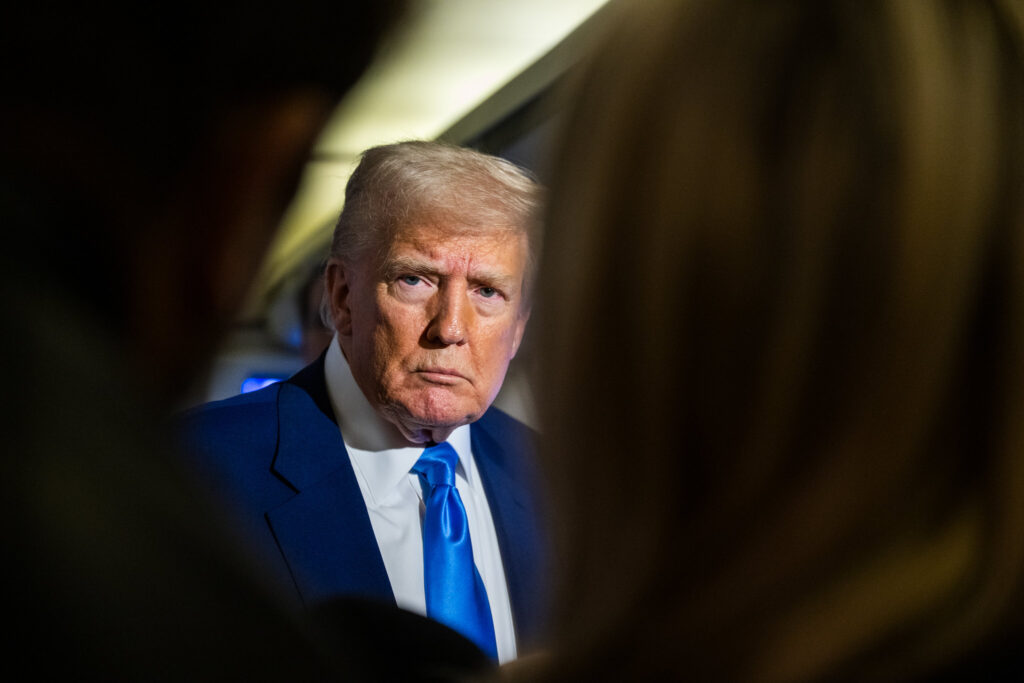
– It was reported on April 26 that Iran submitted a new proposal via Pakistani mediators to reopen the Strait of Hormuz and end the war while deferring nuclear talks to a later stage. This comes one day after President Donald Trump’s abrupt cancellation of a planned trip to Islamabad by envoys Witkoff and Kushner, while commenting Iran’s latest proposal “offered a lot but not enough.”
– President Trump on April 29 rejected Iran’s peace plan due to the postponement of nuclear talks, and said the blockade will remain until Iran agrees to give up nuclear weapons.
-Iranian President Masoud Pezeshkian said Tehran would not negotiate under blockade conditions.
– Iran’s Foreign Minister Abbas Araghchi is traveling to Beijing on May 6 for talks with Chinese Foreign Minister Wang Yi, his first visit to China since the start of the Iran war.
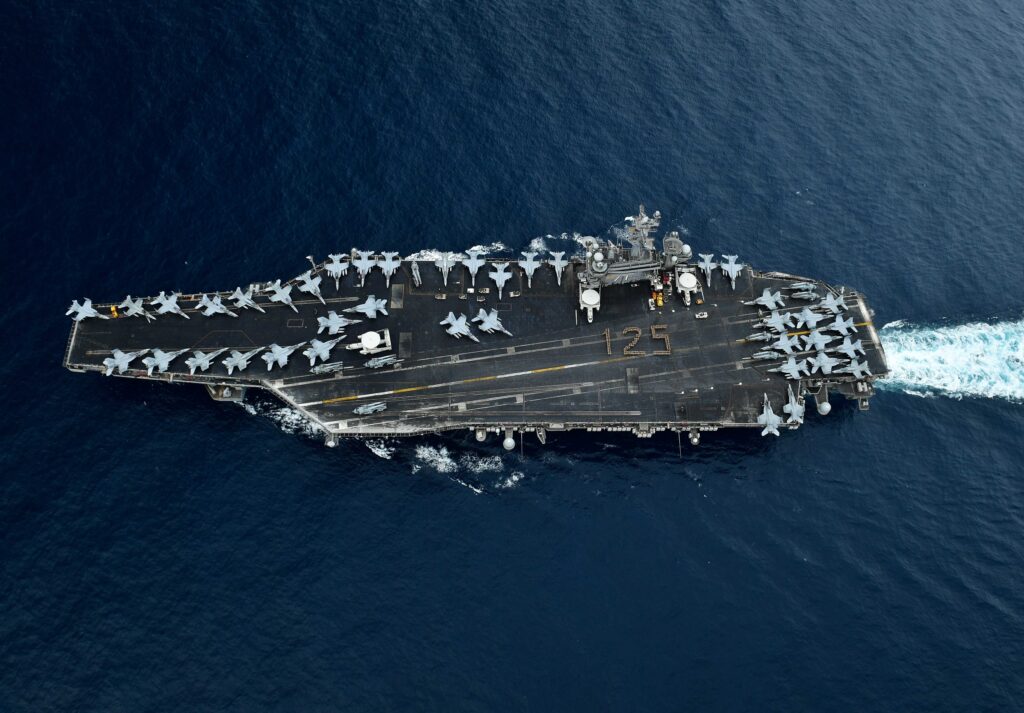
– Treasury Secretary Scott Bessent on May 4 urged China to use diplomacy to pressure Iran, while accusing China of “funding the largest state sponsor of terrorism.” He also called on China and U.S. allies to join “Operation Freedom,” a new American military escort operation announced by Trump to help ships transit the Strait of Hormuz.
– A senior Iranian security official on April 29 warned via state media that if the U.S. naval blockade continues, it will soon be met with “practical and unprecedented action.”
– The war in Iran hit the 60-day mark on May 1, marking the threshold under the War Powers Act of 1973 at which Congress must authorize any further military action, prompting Republican senators to consider supporting an authorization debate.
– In response, President Trump on May 1 notified congressional leaders that hostilities have “terminated” since the April 7 ceasefire and therefore do not require congressional authorization under the War Powers Act. However, he still warned that Iran remains a significant threat and signaled the administration would reset the 60-day clock if conflict resumes.
– Eight weeks into the U.S. war against Iran, acting Pentagon comptroller Jules Hurst said on April 29 that the conflict has cost $25 billion since it started on February 28, mostly in munitions.
– On April 28, White House officials including Vice President JD Vance and Treasury Secretary Scott Bessent met with executives from Chevron, Trafigura, Vitol, and Mercuria to discuss steps to keep energy costs from rising for a possible months-long U.S. blockade.
– On April 30, markets reacted to the latest updates of the war in Iran, with Brent crude briefly spiking to $126 per barrel, its highest level since 2022; and the U.S. gasoline prices hit $4.30 per gallon nationally, with five states topping $5.
Associated News References:
“Iran Foreign Minister Heads to China for First Time Since War,” Bloomberg, May 5
“Bessent Calls on China, Allies to Join US Operation in Hormuz,” Bloomberg, May 4
“Trump seeks to deflate Iran authorization push by telling Congress war is over,” Semafor, May 1
“Brent crude oil hits 4-year high on Iran worries,” The Hill, April 30
“Exclusive / The 60-day itch: Iran war weighs on Republicans,” Semafor, April 29
“Continued US maritime piracy and banditry will face ‘practical, unprecedented’ response: Source,” Press TV, April 29
“Exclusive: Trump rejects Iran’s offer, says blockade stays until nuclear deal,” Axios, April 29
“Pentagon official: Iran war has cost $25B,” Politico, April 29
“Iran offers U.S. deal to reopen strait but postpone nuclear talks,” Axios, April 26
“Trump Cancels Aides’ Trip for Iran Talks: ‘We Have All the Cards’,” The New York Times, April 25
“U.S. imposes sanctions on Chinese ‘teapot’ refinery for buying Iranian oil,” CNBC, April 25
– China’s National Development and Reform Commission on April 27 ordered Meta to unwind its $2 billion acquisition of Singapore-based AI startup Manus, which has Chinese roots, citing compliance with laws and regulations and rattling tech founders who had hoped to use the so-called “Singapore-washing” strategy to avoid scrutiny from both Beijing and Washington.
– It was reported on April 24 that Chinese regulators have told tech firms such as Moonshot AI, StepFun, and ByteDance to reject U.S. capital in funding rounds and secondary share sales without government approval.
– On the same day, Chinese AI startup DeepSeek released a preview of its long-awaited open-source V4 model that significantly outperformed every other open-source system at generating computer code according to Vals AI tests, days after rival Moonshot AI launched its Kimi 2.6 model. Chinese open-source AI accounted for roughly one-third of global AI use last year.
– It was reported on April 26 that DeepSeek delayed its V4 model release to optimize the software stack for Huawei’s Ascend chips rather than just ensuring basic compatibility, in line with Beijing’s push for AI supply chain self-reliance.
– The House Foreign Affairs Committee on April 22 approved the MATCH Act, which would require the State Department to pressure U.S. allies to align their semiconductor export controls with U.S. restrictions on China.
– The White House Office of Science and Technology Policy issued a memorandum on April 23, accusing China of running “industrial-scale distillation campaigns” by using tens of thousands of proxies to steal American AI technology and pledged to take protective action.
– The House Homeland Security and China Select Committees on April 29 sent letters to Airbnb and Anysphere, requesting information about their use of Chinese AI models, with Anysphere having built its Composer 2 model on Moonshot AI’s Kimi and Airbnb using Alibaba’s Qwen for its customer service agent.
– Sens. Bernie Moreno (R-OH) and Elissa Slotkin (D-MI) on April 29 introduced the Connected Vehicle Security Act to ban Chinese-made vehicles, parts, and software from the U.S. market, codifying and expanding a 2025 Commerce Department rule, with the senators citing national security and protection of U.S. automakers.
Associated News References:
“Senators introduce bipartisan bill to ban Chinese vehicles and auto parts,” NBC News, April 29
“Exclusive / House committees probe Cursor parent, Airbnb over Chinese AI,” Semafor, April 29
“China blocks Meta’s $2 billion takeover of AI startup Manus,” CNBC, April 27
“DeepSeek V4 Delay Shows Shift to China Chips, CCTV Account Says,” Bloomberg, April 26
“DeepSeek’s Sequel Set to Extend China’s Reach in Open-Source A.I.,” The New York Times, April 24
“China to Curb US Investment in Tech Companies After Meta Deal,” Bloomberg, April 24
“White House accuses China of ‘industrial-scale’ AI technology theft weeks ahead of Trump-Xi summit,” Fox Business, April 23
“Chairman Mast, HFAC, Advances MATCH Act,” House Committee on Foreign Affairs, April 22
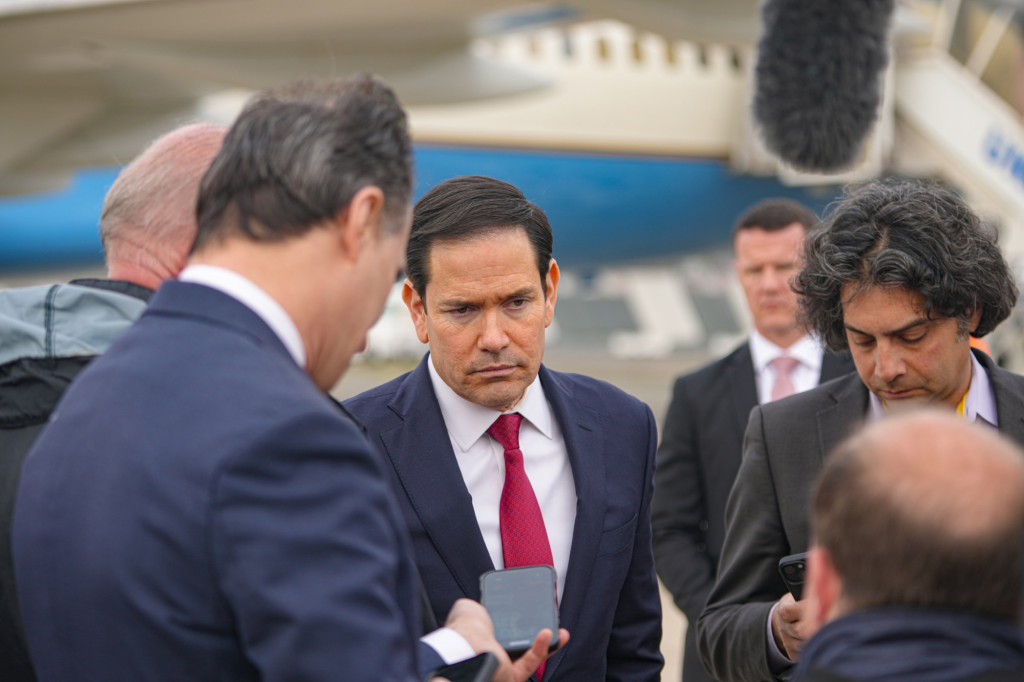
– On May 1, Taiwan expressed concern after an April 30 call between Chinese Foreign Minister Wang Yi and U.S. Secretary of State Marco Rubio in which Beijing described Taiwan as the “biggest risk” in U.S.-China relations, underscoring rising tensions ahead of the Trump-Xi summit.
– Concurrently, bipartisan U.S. senators introduced a nonbinding resolution ahead of the May 14-15 Trump-Xi summit expressing concern over China’s growing threats, particularly toward Taiwan, calling for stronger U.S. deterrence, support for allies, and protection of economic and technological leadership while criticizing China’s military expansion, coercion across the Taiwan Strait, and efforts to isolate Taiwan internationally.
– On May 2, Taiwan President Lai Ching-te visited Eswatini (formerly Swaziland). The trip was originally planned for from April 22-26, but was delayed due to Seychelles, Mauritius, and Madagascar denying overflight access.
– Beijing criticized the trip and reiterated its claim over Taiwan.
– The U.S. State Department on May 4 called Taiwan a “trusted and capable partner” and said President Lai Ching-te’s trip to Eswatini was “routine and should not be politicised.”
– Lai returned from the trip on May 5 and also called this visit “routine.” Eswatini is one of the few countries that still maintains official diplomatic relations with Taiwan instead of China, and is Taiwan’s only diplomatic ally in Africa.
Associated News References:
“Taiwan Defends Right to Visit Friends Despite China Pressure,” Bloomberg, May 4
“US calls Taiwan ‘trusted and capable partner’, praises its ties with Eswatini,” Reuters, May 3
“Taiwan’s president visits Eswatini despite China’s objection,” Deutsche Welle, May 2
“U.S. lawmakers propose China threat resolution ahead of Trump-Xi summit,” Focus Taiwan, May 2
“Taiwan expresses concern after China calls the island biggest risk in US-China relations,” AP News, May 1
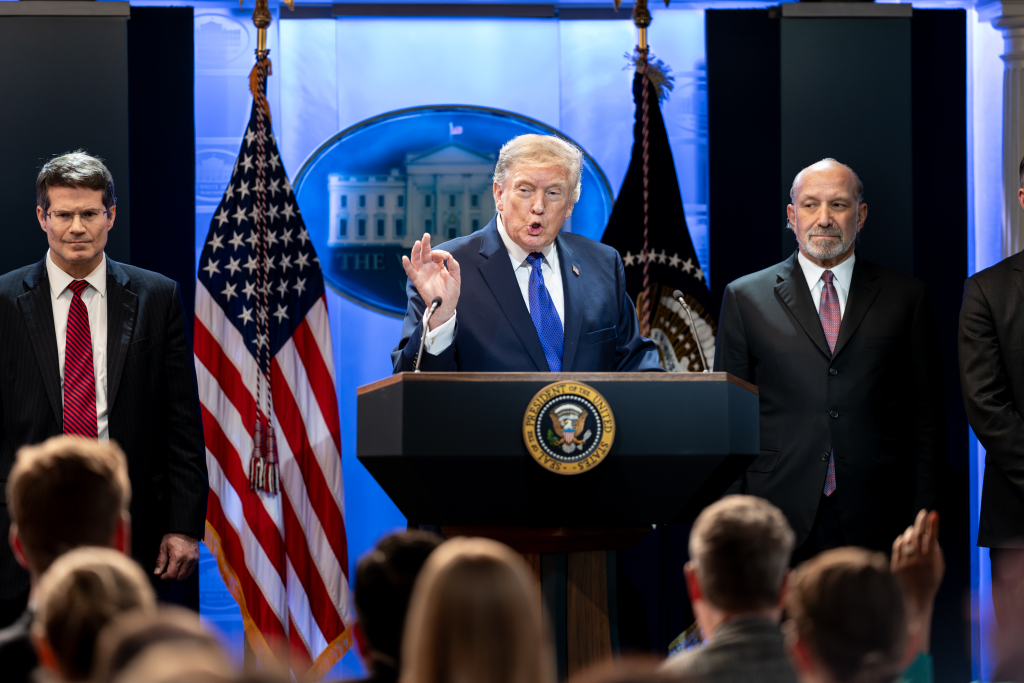
– U.S. Customs and Border Protection on April 28 said it expects to issue its first IEEPA tariff refunds on or around May 11, though importers’ lawyers raised concerns that the agency had not fully stopped collecting the overturned duties and that users were experiencing technical problems accessing the refund system.
– Although more than 50,000 importers completed the steps to apply for reimbursements by early April, consumers may not benefit, as some companies remain noncommittal about passing on the refunded duties.
– The U.S. Treasury Department on April 24 sanctioned 40 shipping firms and vessels and a major Chinese oil refinery, Hengli Petrochemical, in the largest such tranche of Iran-related sanctions since the war began, targeting what officials described as a shadow network of Chinese-linked ships delivering Iranian crude oil in violation of U.S. sanctions.
– On April 28, the Treasury Department warned banks of secondary sanctions if they support Chinese private refiners buying Iranian oil, and announced new sanctions on 35 entities tied to Iran’s shadow banking networks.
– On May 3, China deployed a 2021 blocking measure for the first time, ordered domestic companies not to comply with U.S. sanctions on Chinese refiners, and allowed the sanctioned refiners to seek compensation in Chinese courts from entities that comply with the U.S. sanctions.
– During a phone call on April 30, USTR Jamieson Greer and Treasury Secretary Scott Bessent with Chinese Vice Premier He Lifeng discussed creating a U.S.-China “Board of Trade” to manage bilateral trade in non-sensitive goods and pushed for greater agricultural market access ahead of the May 14-15 Trump-Xi summit.
– The U.S. Trade Representative’s office held hearings April 28-29 related to its Section 301 investigation into whether 60 economies are adequately blocking imports made with forced labor. On May 5, it launched a four-day hearing on its Section 301 investigation into excess industrial capacity in 16 trading partners. Steel manufacturers urged higher tariffs to address overcapacity in China, the EU, South Korea, and Taiwan, while soybean farmers and footwear retailers urged caution to avoid disrupting the U.S.-China trade truce ahead of the Trump-Xi summit and avoid raising costs for consumers.
– The Section 301 probe was launched after the Supreme Court invalidated Trump’s IEEPA tariffs and intended to replicate those duties under a different legal authority before the temporary Section 122 replacement tariffs expire in July.
Associated News References:
“US industries, trade groups split over Trump’s tariff probe on excess factory capacity,” Reuters, May 5
“Public Hearings Regarding Section 301 Investigations Relating to Structural Excess Capacity,” Office of the United States Trade Representative, May 4
“Beijing Tells China Firms to Ignore US Sanctions on Refiners,” Bloomberg, May 2
“Trump Administration Pushes Forward With Tariffs Based on Forced Labor Laws,” The New York Times, May 1
“Greer Discusses ‘Board of Trade’ in Call With China’s He Lifeng,” Bloomberg, April 30
“Treasury Dept. Issues More Sanctions on Iranian Oil Exports,” The New York Times, April 28
“In Tariff Refund Process, First Payment Set to Go Out May 11,” Bloomberg, April 28
“Public Hearings Regarding Section 301 Investigations Relating to Failures to Take Action on Forced Labor,” Office of the United States Trade Representative, April 24
“Tariffs Raised Consumers’ Prices, but the Refunds Go Only to Businesses,” The New York Times, April 24
“US imposes sanctions on a China-based oil refinery and 40 shippers over Iranian oil,” AP News, April 24
– The European Union faced a surge in Chinese electric vehicle exports that contributed to a record $83 billion trade surplus in the first quarter of 2026, underscoring rising economic tensions as the EU considers tariffs and industrial policies to reduce dependence on Chinese imports as Beijing warns of potential retaliation.
– China said it had made progress with the European Union in resolving their dispute over tariffs on Chinese electric vehicles, signaling a potential “soft landing” while urging the EU to follow WTO rules, highlighting ongoing economic competition and negotiation between the two sides.
– China warned it would retaliate against the European Union if it proceeds with plans to ban Huawei Technologies equipment from its networks, escalating tensions as Beijing pushed back against EU efforts to label Chinese firms as security risks and signaling potential countermeasures against European businesses.
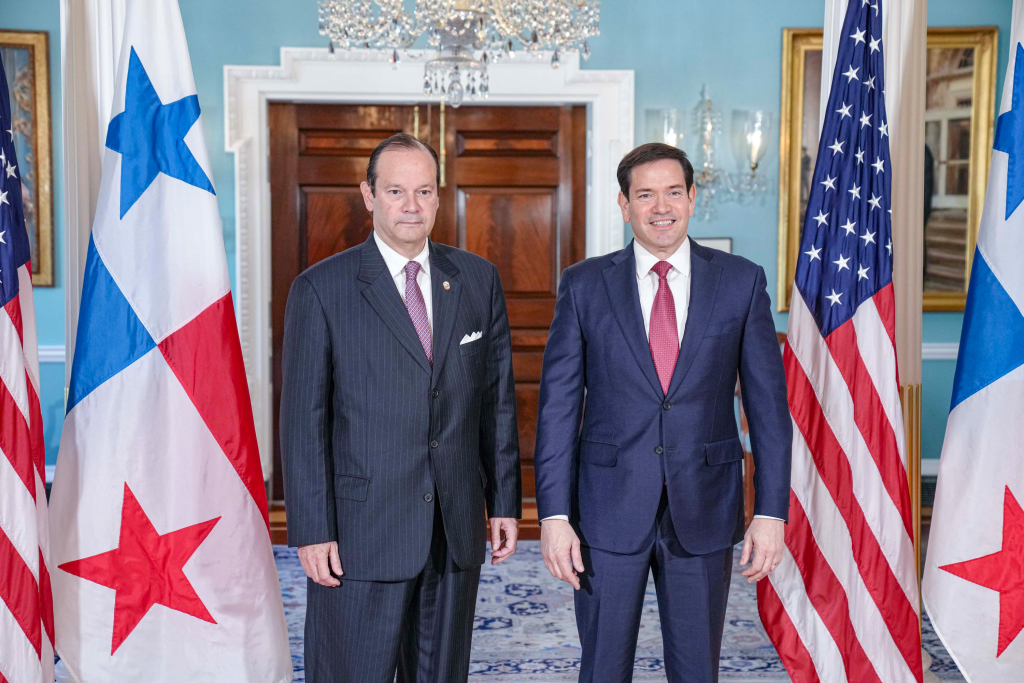
– China called the United States hypocritical after Washington criticized Beijing’s actions in a Panama Canal port dispute, as tensions escalated following reports that China detained Panama-flagged ships and the U.S. and several Latin American partners issued a joint statement backing Panama’s sovereignty, highlighting intensifying competition for influence in the region.
– Bipartisan U.S. senators are urging Donald Trump to develop a stronger strategy to counter China’s growing influence in Latin America ahead of his meeting with Xi Jinping. They warn Beijing is gaining ground through investment, trade, and diplomacy, reflecting concern that the U.S. has lost influence in the region and disputes over the Panama Canal where China has been accused of applying economic pressure on Panama through ship detentions and port-related retaliation.
– China’s Foreign Ministry on May 5 urged the U.S. to immediately end its embargo and sanctions against Cuba, calling the measures “illegal” and a serious violation of international norms, after Trump signed an executive order on May 1 broadening sanctions against the Cuban government.
Associated News References:
“China says wider US sanctions on Cuba are ‘illegal’,” Reuters, May 5
“Why Panama Canal Sparked War of Words Between China and the Americas,” Newsweek, May 2
“GOP, Democratic senators pressure Trump to combat China’s influence in Latin America,” The Hill, April 30
“China calls US hypocritical for expressing concern over Panama’s sovereignty,” Associated Press, April 29
“China Threatens EU With Retaliation if It Bans Huawei Gear,” Bloomberg, April 29
“China says it has made progress with EU in EV tariff dispute,” Reuters, April 28
“EU faces ‘China shock’ as EV imports drive Beijing’s record surplus with bloc,” The Guardian, April 27
“World Cup viewing in doubt for millions of fans in India and China,” Reuters, May 4
“Un-sanctioned: China to welcome Dutch trade minister amid Nexperia, ASML discord,” South China Morning Post, April 28
“White House huddles with tech firms as Mythos raises cyber stakes,” Politico, April 28
“US, allies back Panama’s sovereignty in joint statement,” Reuters, April 28
“Samsung eyes exit from China TV, appliance sales to focus on US,” Nikkei Asia, April 28
“China Publishes Maps Detailing Minerals on the Ocean Floor,” The New York Times, April 27
“China to send giant pandas to Atlanta again,” NBC News, April 24
“Europeans must recognize US, China and Russia are ‘dead against’ us, says Macron,” Politico, April 24
China-Russia Cooperation in the Arctic: Patterns, Constraints, and Policy Implications
By Nong Hong
April 30, 2026
The Arctic is undergoing rapid transformation as climate change accelerates sea-ice retreat, expands seasonal navigability, and increases global interest in the region’s energy resources, shipping routes, and strategic significance. In this evolving environment, cooperation between China and Russia has attracted growing international attention.
While Russia is an Arctic coastal state with extensive jurisdiction and infrastructure in the region, China has gradually expanded its Arctic engagement through investment, scientific research, and participation in regional governance mechanisms…
Strategic Waterways Under Pressure: From Free Passage to Conditional Passage?
By Nong Hong
April 27, 2026
The ICAS Maritime Affairs Program launches “Strategic Waterways Under Pressure,” a series on international straits, sea lanes, and strategic maritime corridors facing growing pressure.
Are strategic maritime corridors moving from free passage to conditional passage? That, increasingly, is the larger question. The issue is not simply whether any particular strait will be formally closed. More often, the change is subtler and more consequential: a waterway remains legally open, yet passage through it is burdened by security risk, regulatory layering, political coercion, commercial rerouting, insurance costs, and exception-based governance. What is at issue, in other words, is not only the law of passage, but the practical usability of passage.
The Strait of Hormuz: Transit Passage and Conditionality Under Pressure
By Nong Hong
April 28, 2026
The present predicament in the Strait of Hormuz is no longer captured by the simple question of whether the waterway is formally open. In March and April 2026, the crisis surrounding the strait drew renewed warnings from the International Maritime Organization, sharp concern over threats to civilian shipping, extensive Global Navigation Satellite Systems (GNSS) interference, mounting insurance and routing pressures, and open legal argument over whether passage could be burdened by payments or other discriminatory conditions. These developments show how a strait may remain open in formal legal terms while becoming markedly thinner, riskier, and more contingent in practice.
Investment as the New Ballast: What the United States Can Learn from Europe
By Yilun Zhang
April 23, 2026
The stabilizing role of trade in U.S.–China relations is no longer reliable. For decades, bilateral trade served as both a channel of interdependence and a buffer against political escalation. While this function has eroded since the 2010s, it remained visible in moments that could have gone very differently—Belgrade 1999, Hainan 2001, the 2008 global financial crisis, and even tensions in the South China Sea during the mid-2010s. Today, that role is fading. Tariffs, export controls, and an expanding national security framework have weakened trade’s capacity to act as a “shock absorber.” In the void left by this decline…
On Tuesday, April 28, 2026, Senior Fellow Sourabh Gupta was quoted by China Daily on China’s push for consumption.
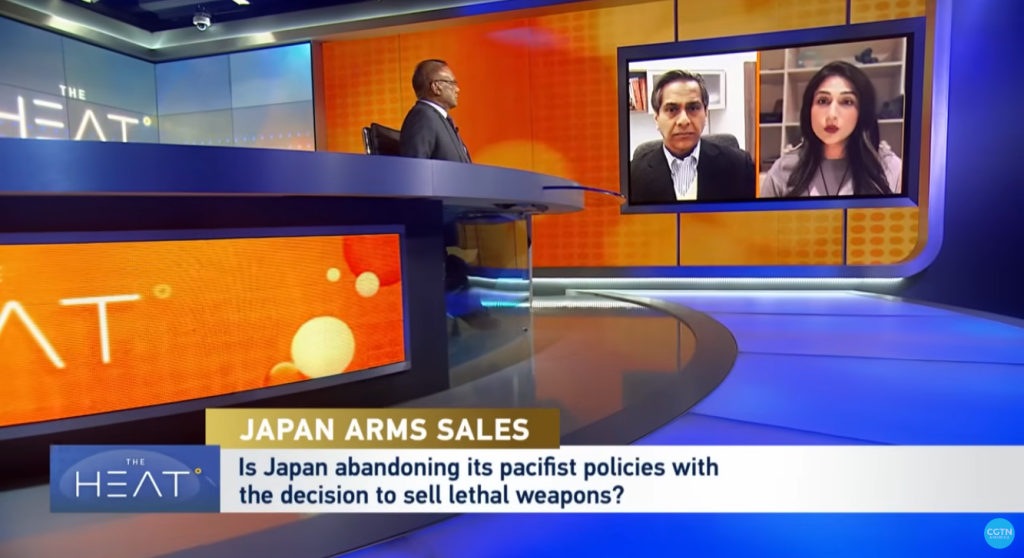
On Tuesday, April 28, 2026, Senior Fellow Sourabh Gupta was interviewed by CGTN America’s The Heat on Japan’s relaxation of arm’s exports.
On Friday, April 24, 2026, Senior Fellow Sourabh Gupta was quoted by South China Morning Post on the Congressional delegation headed for China.
On Wednesday, April 22, 2026, Senior Fellow Sourabh Gupta was quoted by South China Morning Post on Washington’s ‘Psyop’ operations.