

Research Associate
Manager, Trade 'n Technology Program
Cover Image: Shanghai Skyline, Royalty Free Getty Images
On October 28, 2025, right before Chinese President Xi Jinping headed to Busan for the meeting with the U.S. President Donald Trump, China officially unveiled its Fifteenth Five-Year Plan (2026–2030), setting the strategic direction for the country’s development through the end of the decade. More than a technical planning document, the new Plan is fundamentally about China’s domestic priorities—and about how these internal imperatives will shape the next phase of U.S.–China strategic competition. At first glance, the Plan offers a familiar message: steady growth, industrial upgrading, self-reliance, and “high-quality development.” But beneath this continuity lies a deeper structural logic shaped by three pressures. The first is China’s post-pandemic recovery and the fading momentum of the global economy, which leave Beijing with fewer external engines of growth. The second is the need to stimulate an industrial revolution at home—one that upgrades China’s manufacturing base, reinvigorates its domestic market, and prepares the country for global technological shifts. And the third is the enduring reality of U.S.–China strategic competition, which makes economic security inseparable from national security and pushes Beijing further toward autonomy in finance, technology, and supply chains.
The Fifteenth Five-Year Plan (FYP) is therefore not simply a planning document. It is a strategic map for China’s next phase of national development—crafted at a moment when the country faces the rare convergence of deep internal pressures and intensifying external challenges. Slowing globalization, sharper technological fragmentation, and rising geopolitical friction form the external backdrop. At home, China is navigating post-pandemic structural adjustments, a maturing industrial system, shifting demographics, and the long-term task of rebalancing consumption and investment. Against this dual pressure, the Plan underscores a principle that has defined China’s development strategy for decades: when the external environment becomes volatile, the response is not reactive confrontation but deeper internal consolidation and independent capacity building. Its language is measured, but its implications are far-reaching. The Plan reaffirms China’s emphasis on the domestic market; expands Beijing’s commitment to financial stabilization and controlled revitalization; reintroduces real estate as a managed stabilizer rather than a speculative engine; and places technological self-reliance at the center of China’s long-term security calculus. It further outlines Beijing’s calibrated approach to Taiwan and articulates an evolving concept of deterrence—one that increasingly transcends the Western nuclear-centric paradigm and reflects China’s broader commitment to strategic autonomy.
China’s new Five-Year Plan is fundamentally inward-looking, a product of post-pandemic recovery pressures and the geopolitical imperatives of an increasingly contested global environment. Since 2020, China has confronted a series of overlapping constraints: declining external demand, turbulence in global energy and commodity markets, and a structurally slower international growth cycle. Yet these pressures emerged at a time when China had just spent half a decade serving as one of the world’s principal growth engines. According to IMF estimates, China accounted for roughly one-third of global growth in several years between 2020 and 2024, even as the global economy experienced recurrent supply disruptions and inflation surges. Meanwhile, China’s industrial system—which generates 25 percent of global manufacturing value added—continued to operate at a scale unmatched by any other economy.
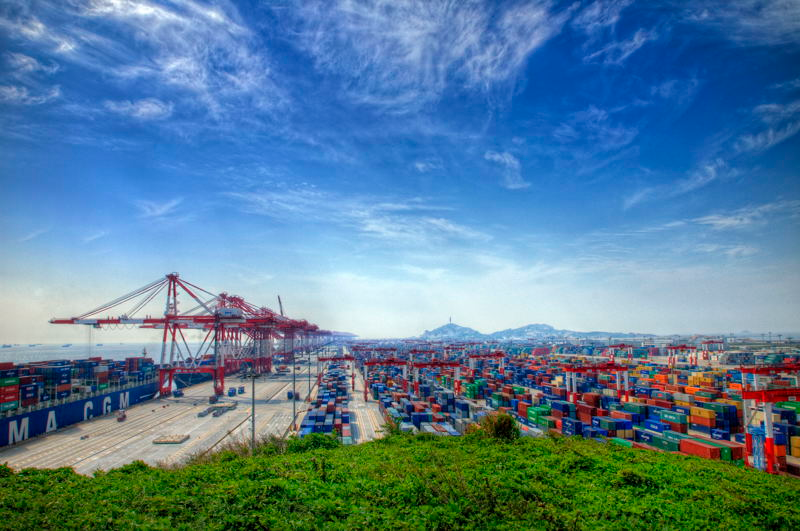
During these years, China’s role in global supply chains was shaped as much by its strengths as by its vulnerabilities. On the one hand, the rapid recovery of Chinese ports—handling more than 40 percent of the world’s containers—helped unclog logistical bottlenecks that slowed global commerce. Its manufacturing consistency in electronics, machinery, medical equipment, and renewable energy served as a stabilizing force at a moment when many supply chains were under severe strain. On the other hand, China faced its own frictions: intermittent pandemic-era shutdowns, rising labor and compliance costs, localized supply disruptions, and the mounting complications posed by export controls, tariff escalations, and tightening technology restrictions from Washington and its partners. Multinational firms operating in China reported greater uncertainty in long-term planning, and early signs of diversification appeared in sectors sensitive to geopolitical pressure.
At the same time, global supply chain dynamics have shown signs of both stickiness and diversification, complicating any linear narrative about China’s role. China’s deep manufacturing ecosystems—ranging from electronics to chemicals to clean energy—retain what analysts call “structural stickiness.” High supplier density, integrated logistics, and a skilled industrial labor force continue to anchor production. Surveys by major foreign chambers of commerce in recent years consistently found that most multinational companies are losing confidence in doing businesses in China. Diversification is undeniably accelerating at the margins. Southeast Asian economies such as Vietnam, Malaysia, and Indonesia have gained incremental shares in global manufacturing, especially in electronics assembly and intermediate goods. India has become a secondary hub for smartphones and pharmaceuticals. These developments represent “China+1” adjustments rather than wholesale relocation, but they illustrate the pressures reshaping the geography of production.
Taken together, these forces have created a dual trajectory: China remains the central node of many global supply chains because of its unparalleled industrial infrastructure, yet it must navigate a more fragmented and politically competitive external environment. This duality reinforces the logic of the Fifteenth Five-Year Plan—namely, that China must strengthen its internal economic engines while preparing for a world in which external conditions are increasingly unpredictable.
The Plan places the domestic market at the heart of China’s economic transformation, not only reiterating the “dual-circulation” strategy but adding new policy tools to address long-standing structural constraints in consumption and production. The most challenging of these is household consumption, which has been the slowest major component of demand to recover since the pandemic. Between 2020 and 2024, consumption growth consistently lagged behind investment and exports, and the household consumption share of GDP remained significantly below levels in advanced economies. Retail sales of basic goods grew at only around 3–4 percent in recent years—less than half the pace recorded before the pandemic—reinforcing the popular notion of “consumption downgrade” and the rise of ultra-low-cost e-commerce platforms.
Yet a closer look at the data reveals a far more complex picture—one that suggests not a collapse in demand, but a shift in its structure and expectations. Spending on basic goods may have plateaued, but demand for services, leisure, and experience-based consumption accelerated dramatically. Tourism-related value added rose to over RMB 5.7 trillion in 2024, increasing its share of GDP. During China’s Golden Week Holiday, domestic passenger trips surged by more than 70 percent year-on-year, with tourism revenue exceeding RMB 750 billion. Dine-in consumption and restaurant revenues recorded double-digit increases in major cities; fitness, outdoor sports, and live entertainment all expanded at similarly strong rates; and spending on cultural activities, gaming, and digital content consistently outpaced traditional retail. In many large cities, demand for high-end dining, boutique travel, wellness services, and premium lifestyle experiences exceeded available supply during peak periods. Rather than signaling “downgrade,” these patterns indicate a structural mismatch: China’s evolving middle-income population is shifting toward higher-quality, diversified services faster than current supply systems can adjust.
It is this mismatch—not a lack of purchasing power—that the Fifteenth Five-Year Plan seeks to address. The Plan links consumption expansion with deeper financial reforms and new investment cycles. Beijing is continuing the RMB 3 trillion “equipment renewal and consumer goods replacement” initiative; promoting upgrades to vehicles, appliances, and production machinery; and expanding policy support for sectors such as elderly care, childcare, culture, sports, and digital services. These measures aim not only to stimulate demand, but to build the “service infrastructure” required for long-term, higher-quality consumption. In this view, consumption is not treated as a short-term stimulus lever but as part of a broader structural transformation.
On the production side, the Plan deepens the manufacturing high-quality development actions launched in 2024, which strengthened key supply chain nodes and introduced systems for industrial risk monitoring, early-warning mechanisms, and emergency coordination. These measures serve a dual strategic purpose: reducing vulnerabilities exposed by U.S. export controls and enabling the technological upgrading associated with the emergence of “new quality productive forces.” As China pushes into advanced manufacturing, green technologies, and digital industries, the domestic market becomes both the testing ground and the strategic anchor for industrial upgrading.
China’s financial reforms aim to stimulate market dynamism while preserving political control, reflecting Beijing’s belief that financial vitality is crucial for industrial upgrading—but unfettered financialization is seen as a strategic risk. For years, China’s financial market has been constrained by two structural concerns: one, the fear of systemic instability triggered by market excesses; and two, ideological and institutional caution rooted in the belief that liberalized finance can undermine state control and economic sovereignty. Yet the twin pressures of a slowing economy and the need to mobilize finance for a new round of industrial transformation have made financial revitalization unavoidable.
The Fifteenth FYP explicitly integrates these tensions into a coherent strategy. It calls for accelerating the construction of a “financial power,” developing technology finance, green finance, inclusive finance, pension finance and digital finance, while strengthening macro-prudential mechanisms and enhancing the authority of the central bank. It also reaffirms the rollout of the digital renminbi (e-CNY) as part of its broader digital financial infrastructure—signaling that the Party-state intends to combine innovation with control.
Concrete policy developments from 2024–2025 illustrate this dual agenda. By mid-2024, China’s quant hedge fund sector—once thriving—was already in serious contraction: as of June 2024, there were 30 quant hedge funds managing over RMB 10 billion (≈US$1.37 billion) each, down from 32 at the end of 2023; the average loss for quant funds in the first half of 2024 was 8.6 %. These figures reflect the regulatory clampdown on speculative algorithmic trading. At the same time, adoption of the digital yuan accelerated sharply: by end-September 2025, cumulative e-CNY transactions reached RMB 14.2 trillion (≈US$2 trillion) across 3.32 billion transactions, with 225 million personal wallets opened. The pilot programme now covers 26 localities in 17 provincial-level regions. These numbers illustrate that China is both curbing speculative, high-risk finance and simultaneously channeling capital and infrastructure behind strategic, state-led financial innovation

Thus, China is seeking controlled financial vitality—not American-style exuberance, but a calibrated system that channels capital into strategic priorities while preventing destabilizing excesses. Where the U.S. has allowed AI-market exuberance and large speculative capital flows to inflate asset markets without commensurate improvements in industrial capacity, China appears intent on avoiding the path of Japan’s 1990s stagnation or the Asian financial crises of the late 1990s. The Fifteenth FYP’s approach reflects this calculation: finance must serve industry, technology and the domestic market—not become an independent driver that risks systemic vulnerability.
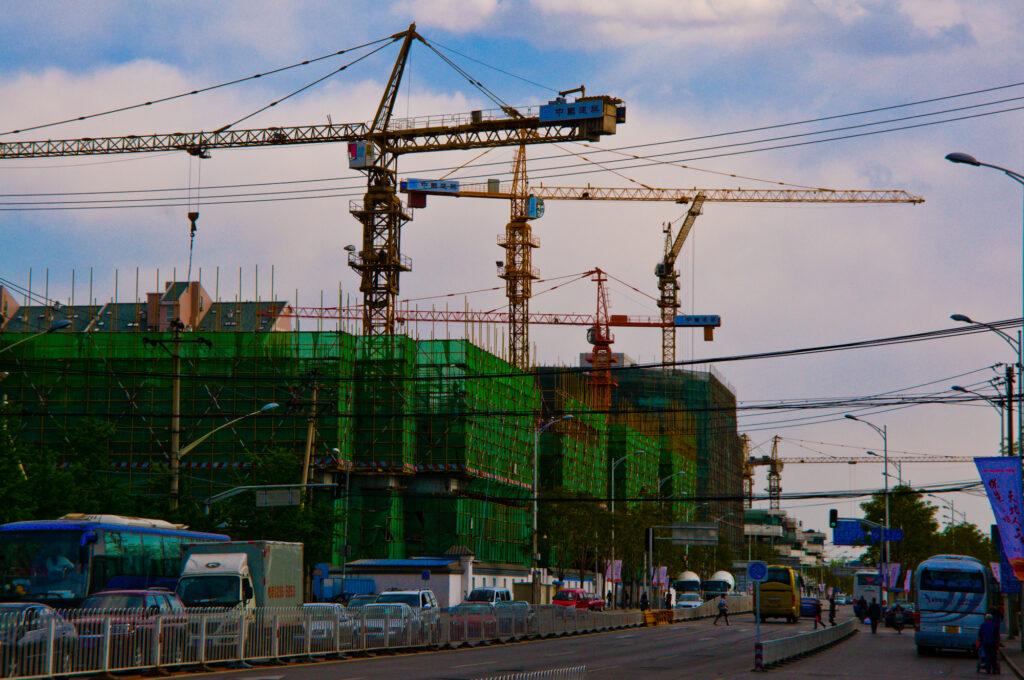
Real estate is returning to China’s growth playbook—not as a speculative engine, but as a stabilizing force within a tightly managed, risk-controlled framework. After several years of deep adjustment, the property sector has weighed on growth and fiscal capacity. Between 2021 and 2024, the real estate and construction sector’s share of GDP fell from roughly 14.5 percent to below 13 percent, and nationwide land-sale revenues declined by more than 20 percent during the same period. These shifts illustrate the extent to which the sector’s downturn has constrained both local government finances and broader macroeconomic momentum.
The Fifteenth FYP acknowledges these constraints and signals a calibrated policy reorientation. The groundwork for this turn was laid through a series of measures in 2024–2025: the PBOC’s reductions in down-payment ratios (including Beijing’s shift of first-home minimum down-payments from 30 percent to 20 percent), broad mortgage-rate adjustments that lowered average housing loan rates to just above 3 percent, and targeted support for resolving distressed developers. Most critically, the nationwide cleanup of local government financing vehicles helped contain systemic risk, reducing the urgency of deleveraging and creating room for a more proactive housing strategy.
Against this backdrop, the Plan envisions a managed revival of the sector—one centered on “development under stability.” The emphasis is on affordable housing, subsidized rental markets, urban renewal, public service expansion, and coordinated regional development. Real estate is not being reinstated as a high-leverage growth engine; it is being repositioned as a stabilizing mechanism within China’s broader macro-risk framework.
Urban renewal in particular represents a major structural driver for the coming decade. China’s first-tier cities—Beijing, Shanghai, and Guangzhou—are now more than 40 years into the post-reform urbanization cycle. Much of their residential and commercial stock dates back to the 1980s, 1990s, and early 2000s, and is increasingly misaligned with current demographic, environmental, and technological needs. Aging neighborhoods, outdated infrastructure, and inefficient land use have created strong demand for redevelopment. In cities like Shanghai and Guangzhou, pilot programs for “micro-renewal,” district-level regeneration, and transit-oriented redevelopment have already expanded rapidly; Beijing’s old-city preservation and renewal projects show similar momentum. The Plan elevates these activities from municipal experimentation to national strategy—making urban renewal one of the primary engines of the next phase of real estate activity.
Technology self-reliance has become the strategic centerpiece of the Fifteenth Five-Year Plan, driven not by ideology but by the structural reality of sustained U.S. technological containment. Between 2020 and 2024, the United States implemented multiple rounds of export controls that restricted China’s access to advanced semiconductors, chip-making equipment, quantum-related technologies, and high-end AI hardware. These measures were reinforced by new outbound-investment restrictions and expanded entity listings. This tightening cycle signaled to Beijing that the U.S. approach was not temporary, but rather a long-term strategy aimed at preserving American technological dominance.
In response, China accelerated its push for breakthroughs across several frontier sectors. During this period, China made notable progress in quantum computing, advanced materials, and biomanufacturing. Chinese research teams achieved major milestones in photonic quantum computing, superconducting circuits, and auxiliary components such as dilution refrigerators and microwave modules. In artificial intelligence, domestic firms expanded their large-model ecosystems and advanced the development of embodied AI, including early-stage mass-production of humanoid robots. Meanwhile, China’s telecommunications and clean-energy manufacturing industries continued to upgrade rapidly, laying the infrastructure for 6G-era applications and global renewable-energy deployment.
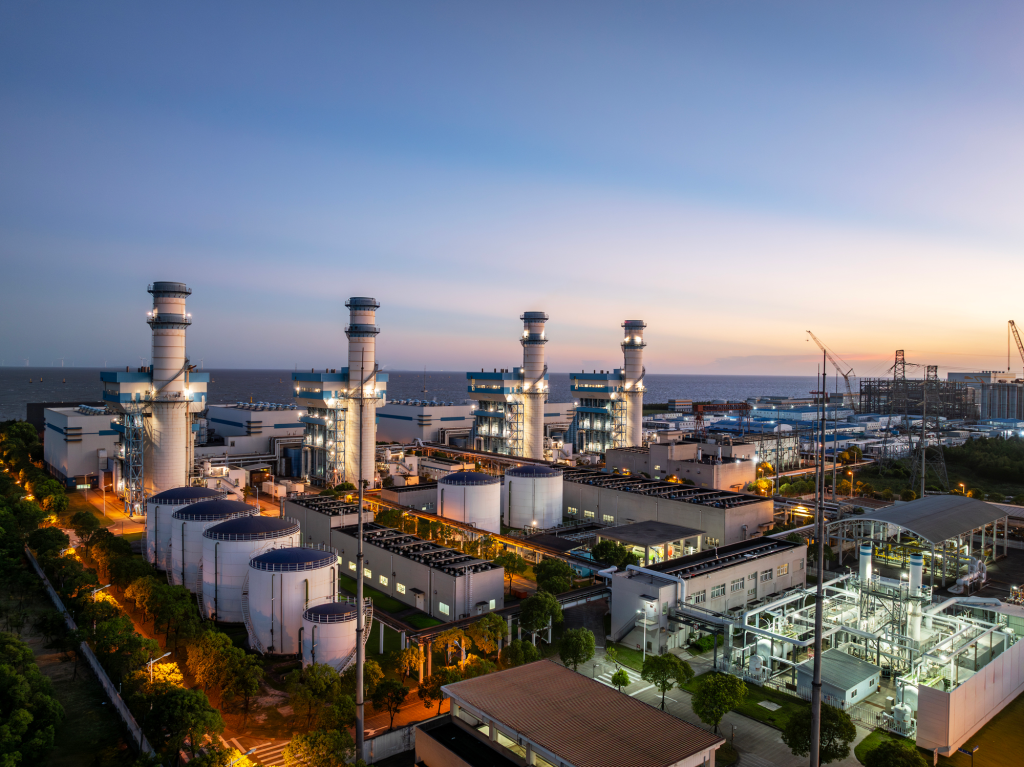
The Fifteenth FYP institutionalizes these efforts and converts them into a long-term strategic framework. The Plan lays out a broad technological agenda—from basic research and next-generation technologies (AI, quantum, biotechnology) to advanced manufacturing, smart infrastructure, and digital governance. It emphasizes supply-chain autonomy, the expansion of national laboratories, and the integration of industrial policy with education, talent development, and scientific research systems. The goal is to ensure that innovation is not a cyclical response to external shocks but a structural driver of national competitiveness.
This shift is reinforced by clear expectations about U.S. policy after 2025. The return of a Trump administration has preserved and in some areas intensified technology restrictions—expanding export controls on advanced AI hardware, tightening investment review standards, and signaling broader scrutiny of Chinese involvement in emerging technologies. Beijing does not expect these pressures to ease; it expects them to deepen. Consequently, technological self-reliance is framed not merely as an economic priority, but as a long-term national-security imperative.
Within this environment, the Plan’s emphasis on “new quality productive forces” reflects a strategic judgment: that China’s next phase of modernization will depend on its ability to build, commercialize, and secure technologies at scale. The interplay between technology, industrial upgrading, and domestic market capacity is designed to form a unified source of long-term resilience. The Fifteenth FYP thus represents a shift from reactive adaptation to a proactive, foundational strategy for national development—one that positions technology as the core of China’s economic and geopolitical future.
The Plan’s language on Taiwan is firm but deliberately non-escalatory, directly contradicting Western narratives of imminent conflict. While the geopolitical conversation in Washington over the past several years has often centered on the prospect of a near-term Chinese move against Taiwan—most prominently the “2027 invasion theory”—the Fifteenth Five-Year Plan presents a markedly different picture: one of continuity, restraint, and strategic patience.
The Plan reaffirms China’s long-standing positions: opposing “Taiwan independence,” opposing external interference, maintaining peace and stability, and advancing peaceful reunification. Crucially, it does not introduce deadlines, ultimatums, or coercive timelines. The absence of a timetable directly undercuts speculation that the People’s Liberation Army (PLA) is preparing for a forced unification by 2027—a narrative that took root in Washington largely due to misleading remarks from lawmakers, military leaders, think tankers, and even Taiwan officials, who characterized 2027 as a benchmark for PLA modernization rather than as a political directive for invasion. Chinese officials have rejected such speculation, emphasizing that Beijing’s preferred path remains peaceful development and cross-Strait integration.
Recent diplomatic episodes reinforce that Beijing’s priority is to deter external political manipulation, not initiate conflict. China’s strong reaction to recent statements by Japanese politician Sanae Takaichi—who framed Taiwan as a matter of Japan’s national survival—demonstrated that Beijing’s warning against “foreign interference” is not solely aimed at the United States. Instead, it reflects concerns that third-party actors may inject nationalist impulses or domestic political agendas into an already sensitive regional issue. This reaction mirrors earlier responses to similar events, including the 2022 visit of then-U.S. House Speaker Nancy Pelosi, which Beijing viewed as a provocative breach of political commitments rather than a shift in its own cross-Strait strategy.
Across these cases, the pattern is consistent: China reacts sharply to what it perceives as external attempts to alter the political status quo, but its policy language and long-term planning documents—including the Fifteenth FYP—continue to emphasize stability and peaceful resolution. The Plan’s restraint aligns with China’s broader strategic calculus: that long-term national unification is best served by economic integration, political confidence-building, and the gradual reduction of external interference, not by near-term military confrontation.
In this context, the Plan reaffirms a familiar balance. On principle, Beijing’s stance is immovable: Taiwan is considered an internal matter, and any form of “Taiwan independence” is categorically rejected. Yet in practice the policy posture remains predictable and non-escalatory—focused on maintaining regional stability, avoiding miscalculation, and counteracting external disruptions rather than actively seeking or preparing for immediate military action.

By anchoring Taiwan-related policy language in continuity and restraint, the Fifteenth FYP sends a clear signal: despite external speculation, Beijing sees peaceful unification—not forced timelines or coercive acceleration—as the most viable and strategically advantageous path.
China’s evolving concept of deterrence extends far beyond nuclear numbers, reflecting a shift toward multi-domain, intelligentized capabilities that traditional Western frameworks are poorly equipped to interpret. The Fifteenth Five-Year Plan uses the term “strategic deterrence,” but its meaning cannot be reduced to nuclear arsenal expansion. Rather, it signals a broader shift in China’s military thinking—one increasingly defined by information dominance, distributed strike capability, and intelligentized operational systems.
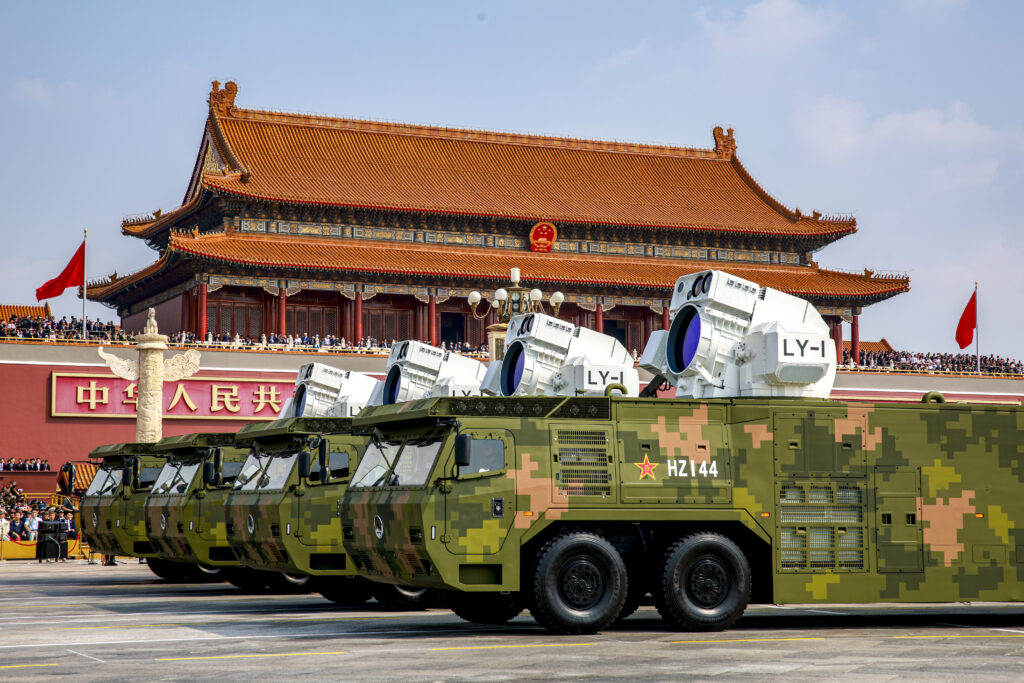
This evolution has been visible in recent demonstrations of military capability, particularly during the 2025 “9-3 parade.” The event showcased a new generation of unmanned combat systems, long-range precision-strike platforms, hypersonic-related support assets, and integrated air-defense components designed for high-end saturation environments. Several of these platforms highlighted China’s increasing emphasis on cross-domain integration: drone swarms linked to AI-enabled command networks, electronic warfare and reconnaissance systems embedded into unmanned platforms, and next-generation sensors capable of supporting real-time battlefield adaptation. These systems reflect a concept of deterrence rooted in denying adversaries operational confidence—not merely through warheads, but through unpredictable, multi-layered capabilities.
China’s ongoing development of sixth-generation fighter prototypes reinforces this shift. Over the past two years, at least three different sixth-generation airframes have reportedly conducted early-stage test flights, each reflecting different emphases—one focused on high-altitude endurance and sensor dominance, another on stealth-platform integration with unmanned loyal-wingman systems, and a third likely optimized for electronic warfare and deep-penetration strike missions. Together, they illustrate a vision of future airpower built around manned–unmanned teaming, AI-driven combat systems, and distributed lethality—core components of China’s concept of intelligentized warfare.
Naval modernization trends point to a similar trajectory. The steady progress of the Fujian aircraft carrier, with its electromagnetic catapult system and increased sortie-generation potential, further expands China’s ability to project air and maritime power. As the Fujian moves through sea trials, it signals a shift from regional naval posture toward a more flexible, multi-theater force structure. Combined with advances in underwater unmanned vehicles, dual-use satellites, and long-range anti-ship systems, China’s deterrence toolkit is becoming more complex, more integrated, and more capable of shaping adversary decision-making before conflict ever begins.
This multidimensional approach stands in contrast to Washington’s tendency to interpret deterrence primarily through nuclear metrics or platform counts. As the Trump administration prepares a new National Security Strategy expected to prioritize hard competition, the gap between how the two countries conceptualize deterrence is likely to widen. China’s focus on intelligentized, cross-domain capability development means that escalation risks will increasingly emerge from asymmetries in perception—not from deliberate signaling.
Understanding this divergence is essential to avoiding misjudgment. China’s notion of “strategic deterrence” reflects a long-term shift toward shaping the strategic environment through information dominance, resilience, and multi-axis operational capability—not through numerical nuclear parity. The Fifteenth Five-Year Plan crystallizes this approach, embedding it into the broader logic of national modernization and security planning.
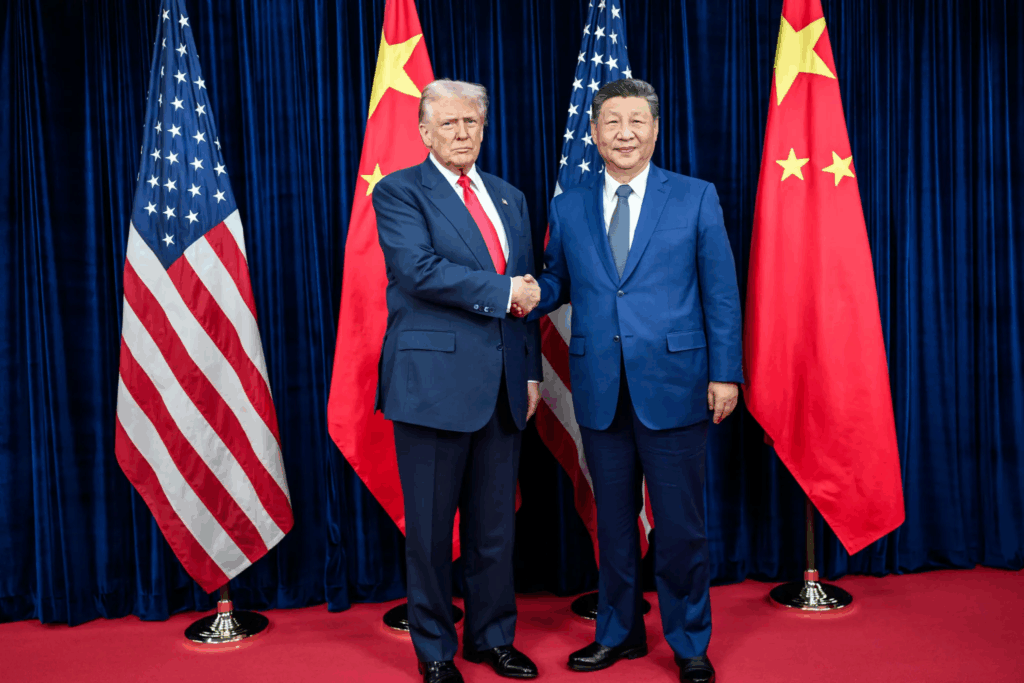
The Fifteenth Five-Year Plan does not mention the United States at all—an omission that, intentional or not, speaks louder than any explicit geopolitical passage. In Washington, China has become an all-purpose explanatory variable, invoked in industrial strategy, supply-chain restructuring, technology restrictions, drug enforcement, military planning, and even domestic economic debates. By contrast, the Fifteenth FYP makes no direct reference to the United States, and its indirect mentions of “unilateralism,” “protectionism,” or “external interference” are long-standing formulations rather than responses to any specific U.S. administration.
This silence reflects a deeper structural reality: China’s policy toward the United States has remained steady and consistent, while U.S. policy toward China has not. Over the past five years, Washington has oscillated between limited engagement, strategic competition, techno-containment, and selective decoupling—often shifting tone within the span of a single term. The transition from the Biden administration to the returning Trump administration only reinforces this volatility. For China, however, the core approach has remained unchanged: seek stability, leave space for cooperation, oppose external interference, and anchor national strategy in domestic priorities rather than in fluctuating foreign expectations.
The absence of the U.S. in the Fifteenth FYP is thus not an oversight but a strategic judgment. Beijing does not tie its medium-term development trajectory to the unpredictable swings of American policy. Instead, it signals that China will continue to advance its own long-term agenda—economic, technological, and social—while managing U.S.–China relations based on stability and continuity rather than reactive adjustment.
In this sense, the silence itself is a message. It underscores the widening asymmetry in strategic consistency: China’s long-term planning remains stable, while America’s China policy is shaped by electoral cycles, political polarization, and shifting ideological currents. This divergence will make the next decade of U.S.–China relations both more complex and more difficult to predict.
The Fifteenth Five-Year Plan is not a blueprint for confrontation; it is a blueprint for stability—yet one whose domestic priorities will inevitably reshape China’s external behavior and the future contours of U.S.–China relations. Its focus on industrial upgrading, financial revitalization without full liberalization, real estate stabilization, technological autonomy, and a steady approach to Taiwan reflects Beijing’s judgment that the world is entering a prolonged period of uncertainty. In such an environment, internal resilience is a more dependable source of national strength than fluctuating external conditions.
For U.S.–China relations, the implications are far-reaching. As China reduces its dependence on external markets and strengthens its domestic industrial and financial foundations, U.S. economic leverage will gradually diminish. At the same time, China’s intensified push for technological self-reliance—especially in strategic sectors such as semiconductors, AI, quantum computing, and advanced manufacturing—will deepen competition in the industries most central to future economic leadership. In the political-security sphere, the Plan’s steady and non-escalatory position on Taiwan contradicts narratives of an imminent conflict, suggesting that Beijing continues to prioritize stability and long-term strategic patience over coercive timelines. China’s evolving notion of strategic deterrence, rooted in multi-domain, intelligentized capabilities rather than nuclear parity, will further challenge long-held U.S. assumptions about how deterrence is signaled, interpreted, and maintained.
Perhaps most consequential is the growing asymmetry in strategic consistency. China’s policy toward the United States has remained broadly stable over the past decade, emphasizing coexistence, dialogue, and managed competition. In contrast, U.S. policy has shifted markedly with electoral cycles and domestic political currents, oscillating between engagement, rivalry, and containment. This divergence means that future bilateral dynamics will be shaped less by short-term rhetoric and more by the deeper question of which country can build a more resilient, adaptive, and strategically coherent domestic foundation.
The Fifteenth Five-Year Plan is China’s attempt to do precisely that—to anchor national development in internal strength rather than external volatility, and to prepare the country for a global environment defined by structural competition and persistent uncertainty. The next phase of U.S.–China relations will therefore depend not only on diplomacy or deterrence, but on the effectiveness of these domestic-building strategies—and on which side can sustain them with clarity, purpose, and long-term resolve.


The Missing Capital and Investment Dimension in U.S.-China Economic Stabilization