
ICAS Maritime Affairs Handbill (online ISSN 2837-3901, print ISSN 2837-3871) is published the last Tuesday of the month throughout the year at 1919 M St NW, Suite 310, Washington, DC 20036.
The online version of ICAS Maritime Affairs Handbill can be found at chinaus-icas.org/icas-maritime-affairs-program/map-handbill/.
Russian superyacht crosses blockaded Strait of Hormuz
April 27 – Reuters
[Russia, Iran]
A superyacht linked to a sanctioned Russian billionaire sailed through the Strait of Hormuz, one of the few vessels to transit the blockaded waterway since the start of the U.S.-Iran conflict. While it is unclear how the vessel gained permission to transit the strait, Russia and Iran are long standing allies and have become closer in recent years due to both countries being subjected heavily to Western sanctions.
Iran offers U.S. deal to reopen strait but postpone nuclear talks
April 26 – AXIOS
[Iran, United States]
According to a U.S. official, Iran gave a new proposal to reopen the Strait of Hormuz and end the war to the U.S. with nuclear negotiations postponed for a later stage. This proposal was given to the U.S. by Pakistani mediators and focuses on solving the crisis over the transit and the U.S. blockade first. White House spokesperson, Olivia Wales, commented that the U.S. would only make a deal that puts the American people first, emphasizing the condition that the U.S. would never allow Iran to have a nuclear weapon.
Two Ships Report Iranian Attacks in Strait of Hormuz
April 21 – The Maritime Executive
[Iran]
UK Maritime Trade Operations reported two ships were attacked in the Strait of Hormuz. The first incident involved a vessel about 15 nautical miles off the Musandam Peninsula sustaining heavy damage from an IRGC gunboat. The second incident occurred a couple of hours later in which another cargo ship was fired upon off the coast of Iran.
US military seizes Iran-flagged ship trying to pass strait of Hormuz blockade
April 20 – The Guardian
[United States, Iran]
The US military attacked and seized an Iranian-flagged container ship that attempted to get past the U.S. blockade. Iran’s joint military command said the seizure was an act of piracy that violated the ceasefire and Tehran would respond swiftly. This event comes at a fragile time of a potential second round of peace talks and extension of the ceasefire.
NATO allies refuse to join Trump’s Strait of Hormuz blockade
April 13 – Reuters
[NATO, United States, Iran]
In a social media statement, U.S. President Donald Trump said that other countries would be involved in the blockade, however NATO allies said that they were instead working on an initiative to open the waterway and would not be a part of Trump’s plan to blockade the Strait of Hormuz. This presents another point of contention between the U.S. and NATO as the war with Iran continues.
U.S. military blockade on Iranian ports in the Strait of Hormuz begins
April 13 – CBS News
[United States, Iran]
On April 13th, the U.S. began a blockade of Iran’s ports and partial blockade of the Strait of Hormuz. Iran warned that it would retaliate if the U.S. carried out this illegal blockade. These events follow the failure of peace talks between the U.S. and Iran in Pakistan over the weekend.
Trump Announces U.S. Blockade of the Strait of Hormuz
April 12 – The Maritime Executive
[United States, Iran]
President Donald Trump released a statement on his social media platform, Truth Social, that the U.S. Navy would blockade the Strait of Hormuz. He accused Iran of “world extortion” and violating international law when it attempted to previously close the strait. U.S. Central Command later announced that the U.S. would be blockading maritime traffic entering and exiting Iranian ports.
Iran says Iraqi ships can pass Strait of Hormuz as transits tick up
April 5 – Al Jazeera
[Iran, Iraq]
Iran announced that Iraqi ships are free to pass through the Strait of Hormuz and that restrictions only apply to “enemy countries”. This announcement comes as President Donald Trump reiterated his demands for Iran to make a deal or relinquish control of the waterway.
Japanese, French and Omani vessels cross the Strait of Hormuz
April 3 – Reuters
[Japan, French, Oman]
Omani, French, and Japanese-owned vessels crossed through the Strait of Hormuz in some of the first transits since the U.S. and Israel began its strikes on Iran.
Bahrain waters down UN proposal over opposition to allowing force to open Strait of Hormuz
April 3 – The Washington Post
[Bahrain, UN Security Council]
The UN Security Council is expected to vote next week on a revised resolution aimed at restoring commercial shipping through the Strait of Hormuz. The latest draft by Bahrain has scaled back on the original resolution after opposition from veto members, such as China and Russia, due to the language of using “all necessary means” to secure the waterway. The revised version now allows for “defensive measures” to ensure safe passage through the strait.
Philippines seeks Iran talks for safe passage of vessels through Hormuz amid energy crisis
April 1 – South China Morning Post
[Philippines, Iran, Malaysia, Thailand]
The Philippines has begun talks with Iran to secure safe passage for its oil tankers through the Strait of Hormuz, following similar arrangements by Malaysia and Thailand. The move reflects growing energy insecurity and a shift toward bilateral negotiations as countries seek to maintain access to the disrupted shipping route.
China, Pakistan call for Iran peace talks, normal navigation in Strait of Hormuz
March 31 – Reuters
[China, Pakistan]
Both China and Pakistan have called for an immediate ceasefire in the Middle East, urging peace talks and the restoration of normal navigation in the Strait of Hormuz. Pakistan has previously stated that it would facilitate peace talks between the U.S. and Iran. China now supports Pakistan playing an important role in the easing of tensions and the potential resumption of peace talks.
Maritime developments in the Strait of Hormuz have become increasingly volatile in recent weeks as tensions between the United States and Iran continue to escalate. The situation intensified after President Donald Trump announced a naval blockade following failed peace talks in Pakistan, targeting Iranian ports and restricting maritime activity within the region. Within a day of the announcement, U.S. military forces began to actively limit access to the Strait of Hormuz and other key shipping routes. Iran responded to the blockade, condemning it as illegal and warned of retaliation.
In the latter half of April, this blockade resulted in escalating tensions within the region. For instance, U.S. forces seized an Iranian-flagged container ship, in response Iran labeled the action as illegal and threatened a quick response. These tensions have also extended beyond the Strait with two commercial vessels reportedly being attacked by the Iran Revolutionary Guard Corps (IRGC) miles away from the waterway. These incidents underline the increasing risks faced by commercial shipping within the region.
After closing the Strait last month, Iran has selectively allowed transit through the waterway from non-hostile nations. Despite escalating tensions, vessels from Japan, France, and Oman successfully transited the strait. These actions have encouraged some countries, including the Philippines, Malaysia, and Thailand, to pursue bilateral agreements with Iran to secure safe passage for their vessels.
Responses to these escalating confrontations and the blockade have been mixed. Earlier this month, the United Nations Security Council drafted a resolution aimed at securing and restoring commercial shipping through the Strait. This resolution was vetoed by Russia and China due to the draft mentioning Iran’s actions but not illegal U.S or Israeli actions as well. NATO allies have declined to support the U.S.-led blockade and instead advocated for keeping the Strait of Hormuz open through a separate initiative. Diplomatic efforts continue at the global level, with China and Pakistan calling for renewed peace talks and the restoration of safe passage through key shipping routes.
Overall, maritime activity in the Strait of Hormuz remains fragile as the key waterway is now a contested corridor being shaped by geopolitical pressure and military presence.
April 23 – America’s Navy
[United States, Australia, Philippines]
Ships from the Royal Australian Navy, Philippine Coast Guard, and the U.S. Navy conducted multilateral operations together in the South China Sea. These operations sought to build readiness and cooperation among allies within the Indo-Pacific region.
U.S. Forces Board Sanctioned Tanker in Indian Ocean as Iran Crackdown Expands Beyond Hormuz
April 21 – gCaptain
[United States, Iran, India Ocean, China]
U.S. forces boarded a sanctioned Iranian-linked oil tanker in the Indian Ocean, marking an expansion of enforcement operations beyond the Strait of Hormuz. The vessel had previously loaded crude oil from Iran and was en route toward Asia, highlighting how U.S. interdiction efforts are now targeting shipping routes. This shift increases uncertainty for shipowners, as vessels may face enforcement actions far beyond the Gulf, signaling that the Hormuz crisis is evolving into a broader, global maritime security challenge.
Navy to Deploy Thousands of Unmanned Surface Vessels to the Indo-Pacific by 2030
April 21 – USNI News
[United States]
The U.S. Navy is looking to field thousands of unmanned surface vessels to the Indo-Pacific by 2030. With the rapid expansion of Chinese military action in the Indo-Pacific, the U.S. Indo-Pacific Command has advocated for swarms of autonomous systems to protect American interests within the region.
Australia and Japan sign contracts for $7bn warships deal
April 19 – Al Jazeera
[Australia, Japan]
Australia and Japan signed a landmark seven billion defence deal with the first three of 11 warships set to be delivered to the Royal Australian Navy in 2029. This deal is part of Australia and Japan’s increase in military cooperation in recent years amid concerns regarding China’s rising influence within the region.
Japan to join largest Balikatan war games with 1,400 troops, Type 88 missiles
April 15 – Naval News
[Japan, Philippines, United States]
Japan will join the annual Balikatan military exercises, which are set from April 20th to May 8th and hosted by the Philippines and the U.S., as an active participant for the first time. Japan’s participation will mark the first time that the country is sending troops to Philippine soil since World War II. Prior to this year, Japan has only sent a small number of observers to the exercises.
US, Australia, Philippines hold second joint drills in South China Sea this year
April 12 – Reuters
[United States, Philippines, Australia]
The U.S. and Australia joined the Philippines for their second joint maritime exercises in the South China Sea this year. From April 9th to 12th, the drills consisted of warships, fighter jets, and surveillance aircraft in a series of coordinated operations to strengthen maritime defence capabilities. These drills come ahead of the April 20th opening of the war games called Balikatan between Manila and Washington.
U.S. Marine Force Southeast Asia Lingers Longer in the Philippines
April 3 – USNI News
[United States, Philippines]
The U.S. Marine Corps is extending the deployment of Marine Rotational Force-Southeast Asia (MRF-SEA) to the Philippines to focus on cooperation with the country’s military. This extension departs from the unit’s standard rotational deployment of six months from October to late March. The MRF-SEA will focus on deepening integration and strengthening defensive capabilities with the Philippine Marine Corps and Armed Forces of the Philippines.
Japan Demands Chinese Research Vessel Stop Unauthorized Activity in EEZ
April 1 – The Maritime Executive
[Japan, China]
An altercation between Japanese and Chinese vessels occurred in the disputed region around the uninhabited Senkaku/Diaoyu islands. The Japanese Coast Guard reported detecting research and Chinese Coast Guard vessels within the disputed zone. They issued a radio warning to the vessels and the ships left the zone one after the other.
Recent developments across the Indo-Pacific reflect an increasingly contested maritime environment, where strategic competition, alliance coordination, and technological innovation are reshaping regional security dynamics. The expansion of U.S. enforcement operations beyond the Strait of Hormuz into the Indian Ocean signals a broader shift toward global maritime monitoring, with implications for key trade routes linking the Middle East to Asia. Regional maritime security is no longer confined to localized chokepoints, but instead embedded within a wider network of strategic sea lanes stretching across the Indo-Pacific.
At the same time, the U.S. and its allies are strengthening military cooperation and forward presence. Joint exercises such as Balikatan and trilateral drills in the South China Sea highlight deepening coordination between the U.S., the Philippines, Australia, and increasingly Japan, whose expanded participation signals a notable shift in its regional security role. These efforts are complemented by longer U.S. Marine deployments in Southeast Asia, reflecting a move toward sustained operational integration rather than rotational engagement.
Parallel to these developments, defense partnerships and capability-building initiatives are accelerating across the region. The seven billion dollar Australia–Japan warship agreement and U.S. plans to deploy large numbers of unmanned surface vessels demonstrate a growing emphasis on technological modernization and distributed maritime capabilities. These investments aim to enhance deterrence and operational flexibility in a region characterized by vast distances and complex maritime terrain.
Meanwhile, tensions continue to manifest in contested maritime spaces, as seen in recent encounters between Chinese and Japanese vessels near the Senkaku/Diaoyu Islands. Such incidents reinforce the persistence of sovereignty disputes and the risk of localized escalation within an already competitive strategic environment. Overall, the Indo-Pacific is witnessing a convergence of military buildup, alliance coordination, and expanding operational reach, reflecting a shift toward a more networked and proactive approach to maritime security. As competition intensifies, the region’s stability will increasingly depend on how these overlapping security efforts interact with ongoing geopolitical tensions and economic interdependence.
Somalia piracy: Another vessel seized as threat level increased
April 26 – BBC
[Somali]
Maritime authorities are warning of an increased threat to ships off the coast of Somalia after several vessels have been seized in suspected acts of piracy. At least four vessels have been targeted in suspected privacy incidents over the past week, with the UK Maritime Trade Operations (UKMTO) raising the threat level after a vessel was seized on April 26th.
17 Nations Complete Visit, Board, Search and Seizure Training in Senegal
April 26 – DVIDS
[Senegal]
Naval forces from 17 nations participated in Visit, Board, Search, and Seizure (VBSS) operations in Senegal as part of efforts aimed at strengthening maritime security in West Africa. The exercises were led by Senegal’s Special Forces Marine unit and brought together teams from across Africa to practice counter-piracy and interdiction tactics.
Iceland and EU Bolster Maritime Cooperation in Reykjavík
April 20 – The Fishing Daily
[Iceland, European Union]
Minister of Industry Hanna Katrín Friðriksson and the European Union’s Commissioner for Fisheries Costas Kadis met in Reykjavík for their annual consultation meeting. Discussions revolved around strengthening joint efforts in arctic affairs, sustainable fisheries, increased collaboration in scientific research, and sharing aquaculture practices.
U.S. Coast Guard to Base First Arctic Security Cutters in Alaska, Boosting High North Presence
April 17 – High North News
[United States]
The U.S. Coast Guard announced that it will homeport its first two Arctic Security Cutters in Alaska, shifting away from its reliance on Seattle and growing focus on the Arctic. A fleet of 11 new vessels are expected to be delivered by 2028 and will mark the first time that these vessels are based in Alaska.
Iran threatens to shut down Red Sea shipping unless US lifts naval blockade
April 15 – South China Morning Post
[United States, Iran, Red Sea]
Iran’s military threatened to block exports and imports across the Persian Gulf region, the Sea of Oman, and the Red Sea unless the U.S. lifted its naval blockade on their ports. This warning comes as a Pakistani delegation arrived in Tehran bringing a new message from Washington after the first peace talks fell flat.
Canada, Finland agree to strengthen collaboration on Arctic science, maritime security
April 15 – Anadolu Ajansi
[Canada, Finland]
Canadian Prime Minister Mark Carney hosted Finnish President Alexander Stubb in Ottawa where they agreed to strengthen bilateral cooperation on arctic science, research, and maritime security. The leaders also agreed to strengthen cooperation on sovereign technology and artificial intelligence.
Gaza aid flotilla aims to break Israeli blockade
April 12 – Reuters
[Gaza, Israel]
A flotilla carrying humanitarian aid to Palestinians in Gaza set sail on Sunday from the Spanish port of Barcelona. 39 vessels, with more expected to join along the route, will make their way towards Palestine to try and break the Israeli blockade on Gaza.
UK says it deployed military to deter Russian submarines from attack on undersea cables
April 9 – Reuters
[United Kingdom, Russia]
United Kingdom Defence Minister John Healey stated that Great Britain deployed military vessels to prevent any attacks on cables and pipelines by Russian submarines that spent more than a month near British waters earlier this year. British forces and allies, including Norway, tracked activity by Russian vessels which have since left the area with no signs of damage to the underwater infrastructure.
Qatar LNG Ships U-Turn After Attempt to Pass Through Hormuz
April 6 – Bloomberg
[Qatar]
Two liquefied natural gas tankers from Qatar u-turned away from the Strait of Hormuz after attempting to sail through the area. Since the U.S. and Israel began their strike on Iran, no loaded LNG tankers have passed through the strait.
Russia Accuses Ukraine of Sinking Ship Carrying Grain Killing Three Crew
April 6 – The Maritime Executive
[Russia, Ukraine]
Russia is accusing Ukraine of using a drone to set a grain ship on fire in the Sea of Azov, leaving three crew members dead. Ukraine has not acknowledged the attack but has accused Russia of using ships to steal grain from Crimea in May 2022.

Recent developments from the Arctic to the South China Sea, from the South Pacific to the Gulf, suggest that the world’s oceans are entering a period of unusual strain. Climate disruption, gray-zone competition, chokepoint vulnerability and infrastructure rivalry are no longer separate trends. They are converging in ways that increasingly shape regional stability, global markets and the wider international order. The central challenge is no longer simply how states compete at sea, but whether maritime spaces can still be governed effectively under layered pressures.
What is changing is not the importance of the oceans, but the form that importance now takes. Maritime space is no longer only a set of shipping lanes, energy corridors or legal jurisdictions. It is also a security theater, an ecological system and a platform for ports, undersea cables and strategic infrastructure. Functions once managed separately are now compressed into the same domain. That is why the maritime sphere is becoming at once more accessible, more contested and more fragile.
The Arctic now offers the clearest example of how environmental change and geopolitical repositioning are reinforcing one another. In late March, Arctic sea ice reached a record-low winter peak, underscoring how quickly the physical operating environment is changing. Yet this spring’s Arctic story has not been climatic alone. Canada’s return to Greenland and NATO’s launch of Arctic Sentry have both signaled a denser layer of political and security attention in the High North. The point is not simply that warming is opening the region. It is that greater access is arriving at the same moment as renewed strategic competition, making the Arctic easier to enter but harder to govern. Shipping, infrastructure, emergency response and environmental protection are all becoming more urgent at a time when the region is also being re-securitized.
Antarctica presents a quieter but, in some ways, more revealing version of the same problem. Here the main stress is not overt confrontation but institutional lag. Broader ocean governance has moved forward, including through the entry into force of the High Seas Treaty, while Antarctic marine governance remains anchored in CCAMLR’s consensus-based system, a framework with real institutional legitimacy but one that has recently found it harder to translate scientific concern into new protective measures. Marine protected areas have continued to face political blockage despite long standing scientific support. The lesson is larger than Antarctica itself: even when the ecological case is clear, collective action can stall when governance mechanisms are slow, fragmented or trust-poor.
The South China Sea illustrates a different source of pressure: the normalization of below-threshold competition. What matters is not only the frequency of incidents, but the political environment in which they now occur. Repeated encounters at sea now unfold within a thicker mix of gray-zone tactics, deterrence signaling and outside security involvement. In April, major joint exercises involving the Philippines and the United States highlighted the deterrence side of the equation, while the opening of a new Philippine coast guard base on Thitu Island showed how operational footholds in contested waters are steadily being hardened. None of this changes the legal basis of the underlying disputes, but it does alter the crisis geometry around them. A confrontation at sea increasingly carries implications not only for sovereignty, but also for alliance credibility, strategic signaling and the acceptable limits of coercion.
If the South China Sea shows how maritime order is contested, the Strait of Hormuz shows how quickly disruption is transmitted worldwide. Even as diplomatic efforts sought to restore traffic, maritime authorities have warned that thousands of civilian seafarers remain stranded and that a coordinated safe-passage framework is still needed. The issue is therefore not only the vulnerability of a narrow waterway. It is the wider governance gap between military escalation and civilian shipping protection. In a densely interconnected maritime economy, uncertainty alone can ripple outward through energy prices, shipping insurance, rerouting costs and market confidence. Hormuz demonstrates that chokepoints now generate global exposure long before their status is fully normalized.
The South Pacific adds another dimension to the picture. On April 1, New Zealand and the Cook Islands signed a new Defence and Security Declaration after a period of tension over the Cook Islands’ external engagements. The agreement reaffirmed New Zealand as the islands’ primary defense and security partner, but its significance is broader. It underscores how the Pacific is no longer peripheral to questions of influence, infrastructure, strategic access and political alignment. Small island states are not passive terrain on which major powers compete. They are political actors whose choices increasingly shape the strategic environment around them.
What these cases reveal is not a single maritime crisis, but a widening gap between how much the global economy depends on the oceans and how weak, fragmented and reactive the politics of governing them has become. Maritime flows remain dense, but the conditions that keep them secure are becoming more contested and less reliable. That is why traditional policy silos are becoming less useful. Climate policy without maritime infrastructure planning is incomplete. Security policy without economic resilience is too narrow. And development policy in island regions cannot be separated from the strategic environment in which it operates.
Nor are the consequences confined to the Indo-Pacific. For Europe, maritime instability now bears directly on trade routes, energy security, insurance costs and the political burden of responding to crises far from its shores. For middle powers and smaller states alike, what happens in contested waters can no longer be treated as distant once its effects are transmitted through shipping, prices and strategic alignment. The oceans are now one of the main channels through which regional instability becomes global exposure.
The central question, then, is not whether the oceans matter, but whether major powers and regional actors can still govern maritime spaces under conditions of simultaneous ecological strain, strategic competition and economic interdependence. If states continue to treat maritime tensions mainly as a series of short-term rivalries, the result will be a more fragmented and crisis-prone seascape. But if they recognize that many maritime pressures, from climate risk to chokepoint disruption, are now functionally shared, there is still room to prevent competition from spilling into wider disorder. That will require not only naval presence and reactive diplomacy, but also stronger crisis-management mechanisms, more resilient maritime infrastructure and a greater willingness to translate legal and scientific consensus into workable governance. The deeper issue in maritime politics today is no longer simply who can project power at sea. It is whether the world can still preserve order in oceans under stress.
This issue’s Flagship Analysis was written by Nong Hong, Executive Director at ICAS.
Australia’s security posture is entering a period of recalibration as shifting global priorities reshape the strategic landscape of the Indo-Pacific. While the United States remains the region’s primary security provider, Washington’s growing focus on the Middle East—particularly amid ongoing conflict with Iran—has raised concerns among regional allies about a potential dilution of U.S. attention toward Asia.
This perception is reinforced by the relatively limited emphasis on the Indo-Pacific in the 2025 U.S. National Security Strategy and the evolving priorities outlined in the 2026 U.S. National Defense Strategy. Although U.S. military presence in the region remains intact, the combination of global commitments and resource constraints has led partners to question the reliability and immediacy of American support in high-intensity contingencies.
For Australia, this emerging “strategic vacuum” does not imply abandonment but rather uncertainty—an environment in which alliance assurances are still present but potentially less decisive. In response, Canberra has increasingly emphasized both self-reliance and diversified security partnerships, particularly with like-minded regional actors.
Japan has emerged as a central pillar in this adjustment. As Tokyo expands its defense industrial base and loosens longstanding constraints on military cooperation, Australia sees an opportunity to deepen bilateral ties beyond traditional alliance frameworks. At the same time, Australia must balance this shift against its parallel effort to stabilize relations with China, its largest trading partner, and maintain functional engagement with broader regional economies.
This evolving posture reflects a broader structural shift: from a U.S.-centric security architecture toward a more networked system in which middle powers play a greater role in shaping deterrence, industrial capacity, and regional order.
Recent developments underscore the extent to which Australia is operationalizing this strategic adjustment, particularly through intensified cooperation with Japan.
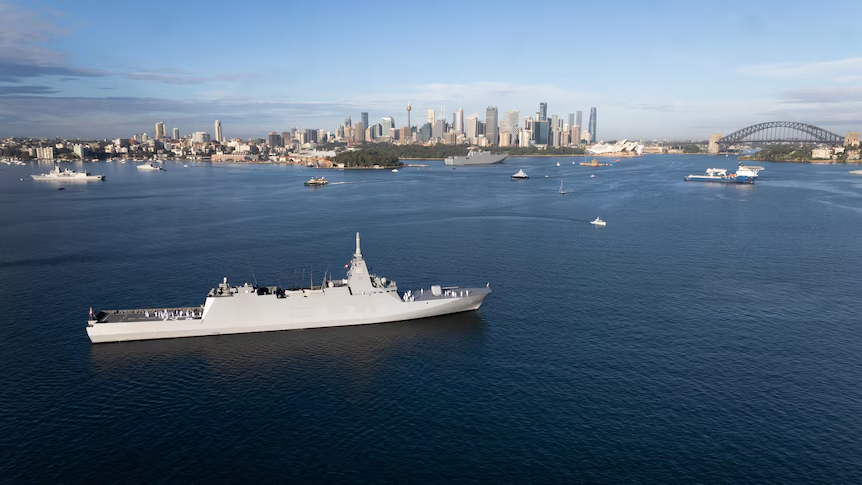
Most notably, Canberra and Tokyo have finalized contracts for the delivery of the first three Mogami-class frigates as part of a A$10 billion program, with Japan’s Mitsubishi Heavy Industries responsible for initial construction. The deal—expected to expand to 11 vessels, including domestically built ships in Western Australia—marks the largest defense export in Japan’s postwar history and represents a significant deepening of bilateral industrial integration.
Beyond procurement, the partnership is evolving toward co-development and co-production. Australian and Japanese officials have emphasized joint efforts in long-range missiles and autonomous systems, reflecting both the growing importance of these capabilities in modern warfare and mounting concerns over strained U.S. defense supply chains. High-intensity conflicts in Ukraine and the Middle East have exposed limitations in American stockpiles, prompting allies to explore more resilient and distributed industrial models.
This shift is not merely technical but structural. What was once a hub-and-spokes system centered on the United States is gradually transitioning into a more networked defense-industrial ecosystem. For Australia, integrating with Japan—widely viewed as an “industrial powerhouse”—offers a pathway to expand domestic capacity while reducing dependence on U.S. supply bottlenecks.
At the same time, Australia is expanding its defense commitments. Under its 2026 National Defense Strategy, Canberra plans to increase military spending by nearly $38 billion over the next decade, with a focus on long-range strike capabilities, maritime assets, and drone technologies. This buildup aligns closely with AUKUS objectives while reinforcing Australia’s role as a forward-operating security actor in the Indo-Pacific.
Yet this hardening security posture is accompanied by a parallel diplomatic track. The Albanese government has sought to repair relations with China, emphasizing economic stability and regional engagement. This week, Foreign Minister Penny Wong is on a trip to meet counterparts in Beijing, Tokyo, and Seoul on energy security and regional coordination, particularly in response to disruptions linked to Middle East instability.
These dual tracks—security integration and diplomatic stabilization—highlight Australia’s attempt to navigate a more complex and fragmented strategic environment.
First, Australia’s deepening defense ties with Japan are driven as much by structural necessity as by strategic alignment. As doubts emerge about the scalability of U.S. military support under conditions of simultaneous global crises, middle powers are increasingly compelled to build interoperable and autonomous capabilities. The Australia–Japan partnership thus reflects a broader shift toward distributed deterrence, rather than a simple strengthening of bilateral ties.
Second, this trajectory introduces new strategic tensions. Japan’s evolving defense posture—including deployments of long-range strike capabilities and a more explicit focus on China as a primary security concern—risks complicating Australia’s parallel effort to stabilize its relationship with Beijing. While Canberra frames its actions in terms of deterrence and resilience, deeper integration with Japan’s defense strategy may be interpreted by China as alignment within a broader containment framework, narrowing diplomatic flexibility.
Third, Australia’s balancing act is further complicated by shifting U.S. expectations. Despite calls for greater burden-sharing, Washington’s own global commitments—particularly in the Middle East—have exposed the limits of alliance coordination. Public criticism from Donald Trump over allied contributions to the Iran conflict underscores a growing transactional element in U.S. alliance management. This dynamic raises questions about how responsibilities will be distributed in future contingencies, particularly in the Indo-Pacific.
Australia’s current approach—simultaneously strengthening defense partnerships, expanding domestic capabilities, and maintaining diplomatic engagement with China—represents an attempt to hedge against multiple forms of uncertainty. However, this strategy is inherently fragile.
As the Indo-Pacific security environment becomes more fluid, Australia’s ability to manage these competing imperatives will not only shape its own strategic trajectory, but also influence the emerging balance between alliance cohesion and regional autonomy.
This issue’s Spotlight was written by Yilun Zhang, Research Associate at ICAS.
Government Releases & Other Press Statements
Analyses & Opinions
Other Research

SAIS Science Diplomacy Summit
April 14, 2026
On April 14, Dr. Nong Hong spoke at the SAIS Science Diplomacy Summit in a session on transboundary waters and the South China Sea. Her remarks focused on the role of science diplomacy in promoting marine environmental protection in the South China Sea. She argued that although science diplomacy cannot resolve the underlying sovereignty and maritime disputes, it remains a practical and necessary channel for cooperation. Drawing on examples from the international, regional, and national levels, she also highlighted the significant differences in how states pursue, frame, and implement science diplomacy in this contested maritime space.
Strategic Adjustment and High Quality Development:
Toward a New Framework for U.S China Relations
April 17, 2026
9:00AM-3:00PM
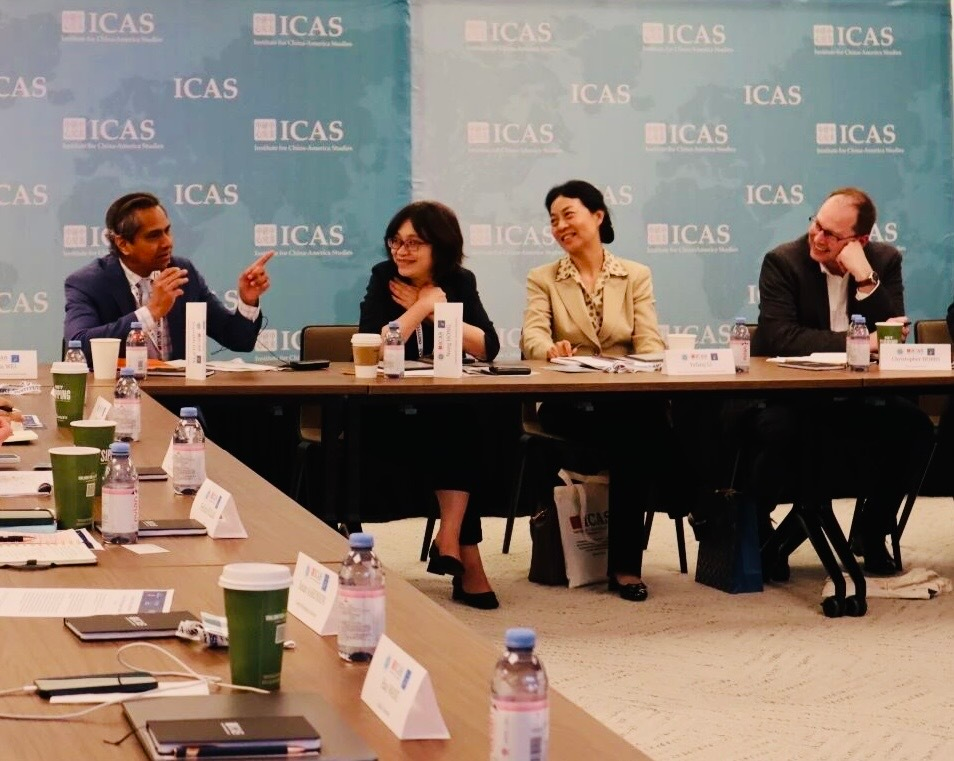
On April 17, 2026, the Institute for China-America Studies (ICAS), in collaboration with the Academy of Contemporary China and World Studies and the Carter Center, organized a symposium titled “High-Quality Development at a Time of Strategic Adjustment: Seeking a New Framework for Managing U.S.-China Relations” in Washington, D.C. The symposium, which was held by invitation only, brought together a diverse group of participants from leading academic institutions, think tanks, policy organizations, and the private sector in both the United States and China.
Strategic Waterways Under Pressure: From Free Passage to Conditional Passage?
By Nong Hong
April 27, 2026
Author’s Note: This article launches “Strategic Waterways Under Pressure”, a series of commentaries for ICAS MAP examining international straits, sea lanes, and strategic maritime corridors at a time of mounting pressure.
Are strategic maritime corridors moving from free passage to conditional passage? That, increasingly, is the larger question. The issue is not simply whether any particular strait will be formally closed. More often, the change is subtler and more consequential: a waterway remains legally open, yet passage through it is burdened by security risk, regulatory layering, political coercion, commercial rerouting, insurance costs, and exception-based governance.
The Strait of Hormuz: Transit Passage and Conditionality Under Pressure
By Nong Hong
April 28, 2026
Author’s Note: The Strait of Hormuz serves as the opening case study in this series because it concentrates, in a single waterway, many of the pressures now reshaping international passage. It is where strategic importance, legal dispute, and practical vulnerability are most clearly intertwined.
The present predicament in the Strait of Hormuz is no longer captured by the simple question of whether the waterway is formally open. In March and April 2026, the crisis surrounding the strait drew renewed warnings from the International Maritime Organization, sharp concern over threats to civilian shipping, extensive Global Navigation Satellite Systems (GNSS) interference, mounting insurance and routing pressures, and open legal argument over whether passage could be burdened by payments or other discriminatory conditions.
Bridging the Gap Between Science and Policy in Arctic Climate Cooperation
By Zhangchen Wang
April 2, 2026
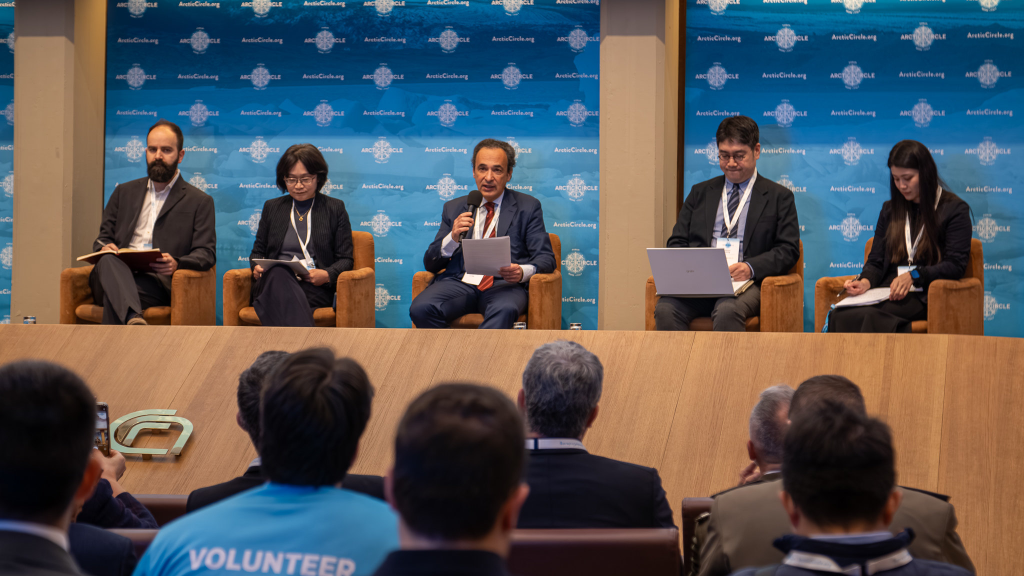
During the 2026 Arctic Circle Rome Forum – Polar Dialogue, a familiar pattern emerged across discussions on climate change and international cooperation. Policy-focused panels repeatedly emphasized the importance of sustaining international climate cooperation amid ongoing geopolitical tensions and escalating climate risks. At the same time, scientific sessions covered a wide range of ongoing research and highlighted the practical challenges they face, many of which could be better alleviated through broader international collaboration.
These two conversations—one focused on policy principles and the other on scientific practice—often unfold in parallel, yet are only weakly connected.